
Artificial Intelligence
Top 10 AI security tools for enterprises in 2026


Enterprise AI has moved from isolated prototypes to systems that shape real decisions: drafting customer responses, summarising internal knowledge, generating code, accelerating research, and powering agent workflows that can trigger actions in business systems. That creates a new security surface, one that sits between people, proprietary data, and automated execution.
AI security tools exist to make those questions operational. Some focus on governance and discovery. Others harden AI applications and agents at runtime. Some emphasise testing and red teaming before deployment. Others help security operations teams handle the new class of alerts AI introduces in SaaS and identity layers.
What counts as an “AI security tool” in enterprise environments?
“AI security” is an umbrella term. In practice, tools tend to fall into a few functional buckets, and many products cover more than one.
- AI discovery & governance: identifies AI use in employees, apps, and third parties; tracks ownership and risk
- LLM & agent runtime protection: enforces guardrails at inference time (prompt injection defenses, sensitive data controls, tool-use restrictions)
- AI security testing & red teaming: tests models and workflows against adversarial techniques before (and after) production release
- AI supply chain security: assesses risks in models, datasets, packages, and dependencies used in AI systems
- SaaS & identity-centric AI risk control: manages risk where AI lives inside SaaS apps and integrations, permissions, data exposure, account takeover, risky OAuth scopes
A mature AI security programme typically needs at least two layers: one for governance and discovery, and another for runtime protection or operational response, depending on whether your AI footprint is primarily “employee use” or “production AI apps.”
Top 10 AI security tools for enterprises in 2026
1) Koi
Koi is the best AI security tool for enterprises because of its approach to AI security from the software control layer, helping enterprises govern what gets installed and adopted in endpoints, including AI-adjacent tooling like extensions, packages, and developer assistants. The matters because AI exposure often enters through tools that look harmless: browser extensions that read page content, IDE add-ons that access repositories, packages pulled from public registries, and fast-moving “helper” apps that become embedded in daily workflows.
Rather than treating AI security as a purely model-level concern, Koi focuses on controlling the intake and spread of tools that can create data exposure or supply chain risk. In practice, that means turning ad-hoc installs into a governed process: visibility into what’s being requested, policy-based decisions, and workflows that reduce shadow adoption. For security teams, it provides a way to enforce consistency in departments without relying on manual policing.
Key features include:
- Visibility into installed and requested tools in endpoints
- Policy-based allow/block decisions for software adoption
- Approval workflows that reduce shadow AI tooling sprawl
- Controls designed to address extension/package risk and tool governance
- Evidence trails for what was approved, by whom, and under what policy
2) Noma Security
Noma Security is often evaluated as a platform for securing AI systems and agent workflows at the enterprise level. It focuses on discovery, governance, and protection of AI applications in teams, especially when multiple business units deploy different models, pipelines, and agent-driven processes.
A key reason enterprises shortlist tools like Noma is scale: once AI adoption spreads, security teams need a consistent way to understand what exists, what it touches, and which workflows represent elevated risk. That includes mapping AI apps to data sources, identifying where sensitive information may flow, and applying governance controls that keep pace with change.
Key features include:
- AI system discovery and inventory in teams
- Governance controls for AI applications and agents
- Risk context around data access and workflow behaviour
- Policies that support enterprise oversight and accountability
- Operational workflows designed for multi-team AI environments
3) Aim Security
Aim Security is positioned around securing enterprise adoption of GenAI, especially the use layer where employees interact with AI tools and where third-party applications add embedded AI features. The makes it particularly relevant for organisations where the most immediate AI risk is not a custom LLM app, but workforce use and the difficulty of enforcing policy in diverse tools.
Aim’s value tends to show up when enterprises need visibility into AI use patterns and practical controls to reduce data exposure. The goal is to protect the business without blocking productivity: enforce policy, guide use, and reduce unsafe interactions while preserving legitimate workflows.
Key features include:
- Visibility into enterprise GenAI use and risk patterns
- Policy enforcement to reduce sensitive data exposure
- Controls for third-party AI tools and embedded AI features
- Governance workflows aligned with enterprise security needs
- Central management in distributed user populations
4) Mindgard
Mindgard stands out for AI security testing and red teaming, helping enterprises pressure-test AI applications and workflows against adversarial techniques. The is especially important for organisations deploying RAG and agent workflows, where risk often comes from unexpected interaction effects: retrieved content influencing instructions, tool calls being triggered in unsafe contexts, or prompts leaking sensitive context.
Mindgard’s value is proactive: instead of waiting for issues to surface in production, it helps teams identify weak points early. For security and engineering leaders, this supports a repeatable process, similar to application security testing, where AI systems are tested and improved over time.
Key features include:
- Automated testing and red teaming for AI workflows
- Coverage for adversarial behaviours like injection and jailbreak patterns
- Findings designed to be actionable for engineering teams
- Support for iterative testing in releases
- Security validation aligned with enterprise deployment cycles
5) Protect AI
Protect AI is often evaluated as a platform approach that spans multiple layers of AI security, including supply chain risk. The is relevant for enterprises that depend on external models, libraries, datasets, and frameworks, where risk can be inherited through dependencies not created internally.
Protect AI tends to appeal to organisations that want to standardise security practices in AI development and deployment, including the upstream components that feed into models and pipelines. For teams that have both AI engineering and security responsibilities, that lifecycle perspective can reduce gaps between “build” and “secure.”
Key features include:
- Platform coverage in AI development and deployment stages
- Supply chain security focus for AI/ML dependencies
- Risk identification for models and related components
- Workflows designed to standardise AI security practices
- Support for governance and continuous improvement
6) Radiant Security
Radiant Security is oriented toward security operations enablement using agentic automation. In the AI security context, that matters because AI adoption increases both the number and novelty of security signals, new SaaS events, new integrations, new data paths, while SOC bandwidth stays limited.
Radiant focuses on reducing investigation time by automating triage and guiding response actions. The key difference between helpful automation and dangerous automation is transparency and control. Platforms in this category need to make it easy for analysts to understand why something is flagged and what actions are being recommended.
Key features include:
- Automated triage designed to reduce analyst workload
- Guided investigation and response workflows
- Operational focus: reducing noise and speeding decisions
- Integrations aligned with enterprise SOC processes
- Controls that keep humans in the loop where needed
7) Lakera
Lakera is known for runtime guardrails that address risks like prompt injection, jailbreaks, and sensitive data exposure. Tools in this category focus on controlling AI interactions at inference time, where prompts, retrieved content, and outputs converge in production workflows.
Lakera tends to be most valuable when an organisation has AI applications that are exposed to untrusted inputs or where the AI system’s behaviour must be constrained to reduce leakage and unsafe output. It’s particularly relevant for RAG apps that retrieve external or semi-trusted content.
Key features include:
- Prompt injection and jailbreak defense at runtime
- Controls to reduce sensitive data exposure in AI interactions
- Guardrails for AI application behaviour
- Visibility and governance for AI use patterns
- Policy tuning designed for enterprise deployment realities
8) CalypsoAI
CalypsoAI is positioned around inference-time protection for AI applications and agents, with emphasis on securing the moment where AI produces output and triggers actions. The is where enterprises often discover risk: the model output becomes input to a workflow, and guardrails must prevent unsafe decisions or tool use.
In practice, CalypsoAI is evaluated for centralising controls in multiple models and applications, reducing the burden of implementing one-off protections in every AI project. The is particularly helpful when different teams ship AI features at different speeds.
Key features include:
- Inference-time controls for AI apps and agents
- Centralised policy enforcement in AI deployments
- Security guardrails designed for multi-model environments
- Monitoring and visibility into AI interactions
- Enterprise integration support for SOC workflows
9) Cranium
Cranium is often positioned around enterprise AI discovery, governance, and ongoing risk management. Its value is particularly strong when AI adoption is decentralised and security teams need a reliable way to identify what exists, who owns it, and what it touches.
Cranium supports the governance side of AI security: building inventories, establishing control frameworks, and maintaining continuous oversight as new tools and features appear. The is especially relevant when regulators, customers, or internal stakeholders expect evidence of AI risk management practices.
Key features include:
- Discovery and inventory of AI use in the enterprise
- Governance workflows aligned with oversight and accountability
- Risk visibility in internal and third-party AI systems
- Support for continuous monitoring and remediation cycles
- Evidence and reporting for enterprise AI programmes
10) Reco
Reco is best known for SaaS security and identity-driven risk management, which is increasingly relevant to AI because so much “AI exposure” exists inside SaaS tools, copilots, AI-powered features, app integrations, permissions, and shared data.
Rather than focusing on model behaviour, Reco helps enterprises manage the surrounding risks: account compromise, risky permissions, exposed files, overintegrations, and configuration drift. For many organisations, reducing AI risk starts with controlling the platforms where AI interacts with data and identity.
Key features include:
- SaaS security posture and configuration risk management
- Identity threat detection and response for SaaS environments
- Data exposure visibility (files, sharing, permissions)
- Detection of risky integrations and access patterns
- Workflows aligned with enterprise identity and security operations
Why AI security matters for enterprises
AI creates security issues that don’t behave like traditional software risk. The three drivers below are why many enterprises are building dedicated AI security abilities.
1) AI can turn small mistakes into repeated leakage
A single prompt can expose sensitive context: internal names, customer details, incident timelines, contract terms, design decisions, or proprietary code. Multiply that in thousands of interactions, and leakage becomes systematic not accidental.
2) AI introduces a manipulable instruction layer
AI systems can be influenced by malicious inputs, direct prompts, indirect injection through retrieved content, or embedded instructions inside documents. A workflow may “look normal” while being steered into unsafe output or unsafe actions.
3) Agents expand blast radius from content to execution
When AI can call tools, access files, trigger tickets, modify systems, or deploy changes, a security problem is not “wrong text.” It becomes “wrong action,” “wrong access,” or “unapproved execution.” That’s a different level of risk, and it requires controls designed for decision and action pathways, not just data.
The risks AI security tools are built to address
Enterprises adopt AI security tools because these risks show up fast, and internal controls are rarely built to see them end-to-end:
- Shadow AI and tool sprawl: employees adopt new AI tools faster than security can approve them
- Sensitive data exposure: prompts, uploads, and RAG outputs can leak regulated or proprietary data
- Prompt injection and jailbreaks: manipulation of system behaviour through crafted inputs
- Agent over-permissioning: agent workflows get excessive access “to make it work”
- Third-party AI embedded in SaaS: features ship inside platforms with complex permission and sharing models
- AI supply chain risk: models, packages, extensions, and dependencies bring inherited vulnerabilities
The best tools help you turn these into manageable workflows: discovery → policy → enforcement → evidence.
What Strong Enterprise AI Security Looks Like
AI security succeeds when it becomes a practical operating model, not a set of warnings.
High-performing programmes typically have:
- Clear ownership: who owns AI approvals, policies, and exceptions
- Risk tiers: lightweight governance for low-risk use, stronger controls for systems touching sensitive data
- Guardrails that don’t break productivity: strong security without constant “security vs business” conflict
- Auditability: the ability to show what is used, what is allowed, and why decisions were made
- Continuous adaptation: policies evolve as new tools and workflows emerge
This is why vendor selection matters. The wrong tool can create dashboards without control, or controls without adoption.
How to choose AI security tools for enterprises
Avoid the trap of buying “the AI security platform.” Instead, choose tools based on how your enterprise uses AI.
- Is most use employee-driven (ChatGPT, copilots, browser tools)?
- Are you building internal LLM apps with RAG, connectors, and access to proprietary knowledge?
- Do you have agents that can execute actions in systems?
- Is AI risk mostly inside SaaS platforms with sharing and permissions?
Decide what must be controlled vs observed
Some enterprises need immediate enforcement (block/allow, DLP-like controls, approvals). Others need discovery and evidence first.
Prioritise integration and operational fit
A great AI security tool that can’t integrate into identity, ticketing, SIEM, or data governance workflows will struggle in enterprise environments.
Run pilots that mimic real workflows
Test with scenarios your teams actually face:
- Sensitive data in prompts
- Indirect injection via retrieved documents
- User-level vs admin-level access differences
- An agent workflow that has to request elevated permissions
Choose for sustainability
The best tool is the one your teams will actually use after month three, when the novelty wears off and real adoption begins. Enterprises don’t “secure AI” by declaring policies. They secure AI by building repeatable control loops: discover, govern, enforce, validate, and prove. The tools above represent different layers of that loop. The best choice depends on where your risk concentrates, workforce use, production AI apps, agent execution pathways, supply chain exposure, or SaaS/identity sprawl.
Image source: Unsplash

Klarna aims to address the lack of interoperability between conversational AI agents and backend payment systems by backing Google’s Universal Commerce Protocol (UCP), an open standard designed to unify how AI agents discover products and execute transactions.
The partnership, which also sees Klarna supporting Google’s Agent Payments Protocol (AP2), places the Swedish fintech firm among the early payment providers to back a standardised framework for automated shopping.
The interoperability problem with AI agent payments
Current implementations of AI commerce often function as walled gardens. An AI agent on one platform typically requires a custom integration to communicate with a merchant’s inventory system, and yet another to process payments. This integration complexity inflates development costs and limits the reach of automated shopping tools.
Google’s UCP attempts to solve this by providing a standardised interface for the entire shopping lifecycle, from discovery and purchase to post-purchase support. Rather than building unique connectors for every AI platform, merchants and payment providers can interact through a unified standard.
David Sykes, Chief Commercial Officer at Klarna, states that as AI-driven shopping evolves, the underlying infrastructure must rely on openness, trust, and transparency. “Supporting UCP is part of Klarna’s broader work with Google to help define responsible, interoperable standards that support the future of shopping,” he explains.
Standardising the transaction layer
By integrating with UCP, Klarna allows its technology – including flexible payment options and real-time decisioning – to function within these AI agent environments. This removes the need for hardcoded platform-specific payment logic. Open standards provide a framework for the industry to explore how discovery, shopping, and payments work together across AI-powered environments.
The implications extend to how transactions settle. Klarna’s support for AP2 complements the UCP integration, helping advance an ecosystem where trusted payment options work across AI-powered checkout experiences. This combination aims to reduce the friction of users handing off a purchase decision to an automated agent.
“Open standards like UCP are essential to making AI-powered commerce practical at scale,” said Ashish Gupta, VP/GM of Merchant Shopping at Google. “Klarna’s support for UCP reflects the kind of cross-industry collaboration needed to build interoperable commerce experiences that expand choice while maintaining security.”
Adoption of Google’s UCP by Klarna is part of a broader shift
For retail and fintech leaders, the adoption of UCP by players like Klarna suggests a requirement to rethink commerce architecture. The shift implies that future payments may increasingly come through sources where the buyer interface is an AI agent rather than a branded storefront.
Implementing UCP generally does not require a complete re-platforming but does demand rigorous data hygiene. Because agents rely on structured data to manage transactions, the accuracy of product feeds and inventory levels becomes an operational priority.
Furthermore, the model maintains a focus on trust. Klarna’s technology provides upfront terms designed to build trust at checkout. As agent-led commerce develops, maintaining clear decisioning logic and transparency remains a priority for risk management.
The convergence of Klarna’s payment rails with Google’s open protocols offers a practical template for reducing the friction of using AI agents for commerce. The value lies in the efficiency of a standardised integration layer that reduces the technical debt associated with maintaining multiple sales channels. Success will likely depend on the ability to expose business logic and inventory data through these open standards.
See also: How SAP is modernising HMRC’s tax infrastructure with AI
Want to learn more about AI and big data from industry leaders? Check out AI & Big Data Expo taking place in Amsterdam, California, and London. The comprehensive event is part of TechEx and is co-located with other leading technology events including the Cyber Security & Cloud Expo. Click here for more information.
AI News is powered by TechForge Media. Explore other upcoming enterprise technology events and webinars here.
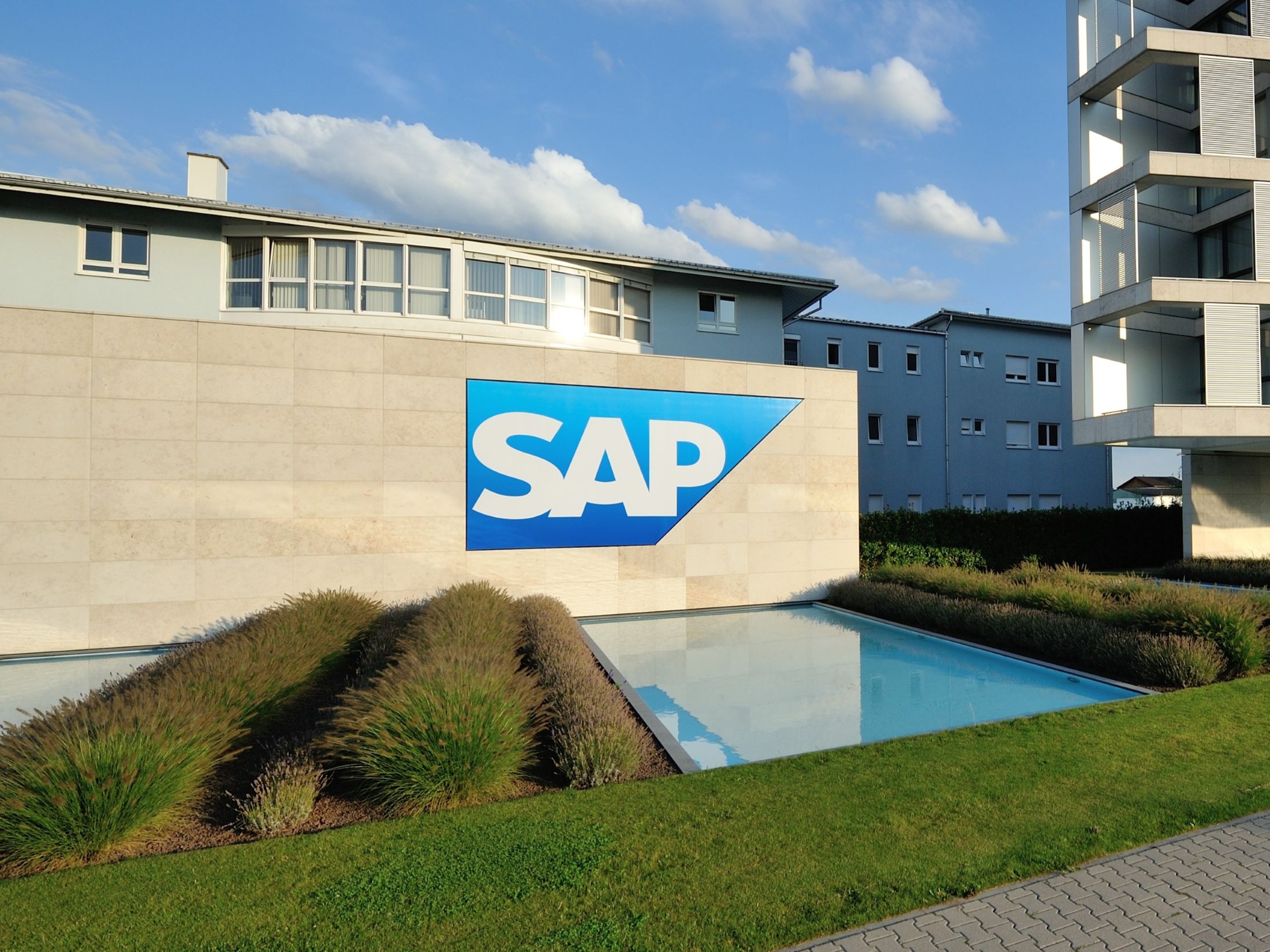
HMRC has selected SAP to overhaul its core revenue systems and place AI at the centre of the UK’s tax administration strategy.
The contract represents a broader shift in how public sector bodies approach automation. Rather than layering AI tools over legacy infrastructure, HMRC is replacing the underlying architecture to support machine learning and automated decision-making natively.
The AI-powered modernisation effort focuses on the Enterprise Tax Management Platform (ETMP), the technological backbone responsible for managing over £800 billion in annual tax revenue and which currently supports over 45 tax regimes. By migrating this infrastructure to a managed cloud environment via RISE with SAP, HMRC aims to simplify a complex technology landscape that tens of thousands of staff rely on daily.
Effective machine learning requires unified data sets, which are often impossible to maintain across fragmented on-premise legacy systems. As part of the deployment, HMRC will implement SAP Business Technology Platform and AI capabilities. These tools are designed to surface insights faster and automate processes across tax administration.
SAP Sovereign Cloud meets local AI adoption requirements
Deploying AI in such highly-regulated sectors requires strict data governance. HMRC will host these new capabilities on SAP’s UK Sovereign Cloud. This ensures that while the tax authority adopts commercial AI tools, it adheres to localised requirements regarding data residency, security, and compliance.
“Large-scale public systems like those delivered by HMRC must operate reliably at national scale while adapting to changing demands,” said Leila Romane, Managing Director UKI at SAP.
“By modernising one of the UK’s most important platforms and hosting it on a UK sovereign cloud, we are helping to strengthen the resilience, security, and sustainability of critical national infrastructure.”
Using AI to modernise tax infrastructure
The modernisation ultimately aims to reduce friction in taxpayer interactions. SAP and HMRC will work together to define new AI capabilities specifically aimed at improving taxpayer experiences and enhancing decision-making.
For enterprise leaders, the lesson here is the link between data accessibility and operational value. The collaboration provides HMRC employees with better access to analytical data and an improved user interface. This structure supports greater confidence in real-time analysis and reporting; allowing for more responsive and transparent experiences for taxpayers.
The SAP project illustrates that AI adoption is an infrastructure challenge as much as a software one. HMRC’s approach involves securing a sovereign cloud foundation before attempting to scale automation. For executives, this underscores the need to address technical debt and data sovereignty to enable effective AI implementation in areas as regulated as tax and finance.
See also: Accenture: Insurers betting big on AI
Want to learn more about AI and big data from industry leaders? Check out AI & Big Data Expo taking place in Amsterdam, California, and London. The comprehensive event is part of TechEx and is co-located with other leading technology events including the Cyber Security & Cloud Expo. Click here for more information.
AI News is powered by TechForge Media. Explore other upcoming enterprise technology events and webinars here.
If you are a data and analytics leader, then you know agentic AI is fuelling unprecedented speed of change right now. Knowing you need to do something and knowing what to do, however, are two different things. The good news is providers like ThoughtSpot are able to assist, with the company in its own words determined to ‘reimagin[e] analytics and BI from the ground up’.
“Certainly, agentic systems really are shifting us into very new territory,” explains Jane Smith, field chief data and AI officer at ThoughtSpot. “They’re shifting us away from passive reporting to much more active decision making.
“Traditional BI waits for you to find an insight,” adds Jane. “Agentic systems are proactively monitoring data from multiple sources 24/7; they’re diagnosing why changes happened; they’re triggering the next action automatically.
“We’re getting much more action-oriented.”
Alongside moving from passive to active, there are two other ways in which Jane sees this change taking place in BI. There is a shift towards the ‘true democratisation of data’ on one hand, but on the other is the ‘resurgence of focus’ on the semantic layer. “You cannot have an agent taking action in the way I just described when it doesn’t strictly understand business context,” says Jane. “A strong semantic layer is really the only way to make sense… of the chaos of AI.”
ThoughtSpot has a fleet of agents to take action and move the needle for customers. In December, the company launched four new BI agents, with the idea that they work as a team to deliver modern analytics.
Spotter 3, the latest iteration of an agent first debuted towards the end of 2024, is the star. It is conversant with applications like Slack and Salesforce, and can not only answer questions, but assess the quality of its answer and keep trying until it gets the right result.
“It leverages the [Model Context] protocol, so you can ask your questions to your organisation’s structured data – everything in your rows, your columns, your tables – but also incorporate your unstructured data,” says Jane. “So, you can get really context-rich answers to questions, all through our agent, or if you wish, through your own LLM.”
With this power, however, comes responsibility. As ThoughtSpot’s recent eBook exploring data and AI trends for 2026 notes, the C-suite needs to work out how to design systems so every decision – be it human or AI – can be explained, improved, and trusted.
ThoughtSpot calls this emerging architecture ‘decision intelligence’ (DI). “What we’ll see a lot of, I think, will be decision supply chains,” explains Jane. “Instead of a one-off insight, I think what we’re going to see is decisions… flow through repeatable stages, data analysis, simulation, action, feedback, and these are all interactions between humans and machines that will be logged in what we can think of as a decision system of record.”
What would this look like in practice? Jane offers an example from a clinical trial in the pharma industry. “The system would log and version, really, every step of how a patient is chosen for a clinical trial; how data from a health record is used to identify a candidate; how that decision was simulated against the trial protocol; how the matching occurred; how potentially a doctor ultimately recommended this patient for the trial,” she says.
“These are processes that can be audited, they can be improved for the following trial. But the very meticulous logging of every element of the flow of this decision into what we think of as a supply chain is a way that I would visualise that.”
ThoughtSpot is participating at the AI & Big Data Expo Global, in London, on February 4-5. You can watch the full interview with Jane Smith below:
Photo by Steve Johnson on Unsplash
-

 Fintech6 months ago
Race to Instant Onboarding Accelerates as FDIC OKs Pre‑filled Forms | PYMNTS.com
-

 Cyber Security7 months ago
Hackers Use GitHub Repositories to Host Amadey Malware and Data Stealers, Bypassing Filters
-
Fintech6 months ago
DAT to Acquire Convoy Platform to Expand Freight-Matching Network’s Capabilities | PYMNTS.com
-

 Fintech5 months ago
ID.me Raises $340 Million to Expand Digital Identity Solutions | PYMNTS.com
-

 Artificial Intelligence7 months ago
Nothing Phone 3 review: flagship-ish
-

 Artificial Intelligence7 months ago
The best Android phones
-
 Fintech3 months ago
Tracking the Convergence of Payments and Digital Identity | PYMNTS.com
-

 Fintech7 months ago
Intuit Adds Agentic AI to Its Enterprise Suite | PYMNTS.com