
For many, iRobot’s Roomba robot vacuum was their first experience with a home robot. When I got my Roomba in 2005, I felt like I was a step closer to my dream of living in a Jetsons-style home where a robot did my chores for me. It was expensive, around $300 for a small black disc on wheels that sucked up dirt, but its promise to do one of my most-hated chores while I was at work was compelling. The reality back then was that I spent more time babysitting it than it did actually cleaning my floors, but it was an exciting glimpse into the future of today’s excellent robot vacuums.
Artificial Intelligence
How Roomba invented the home robot — and lost the future

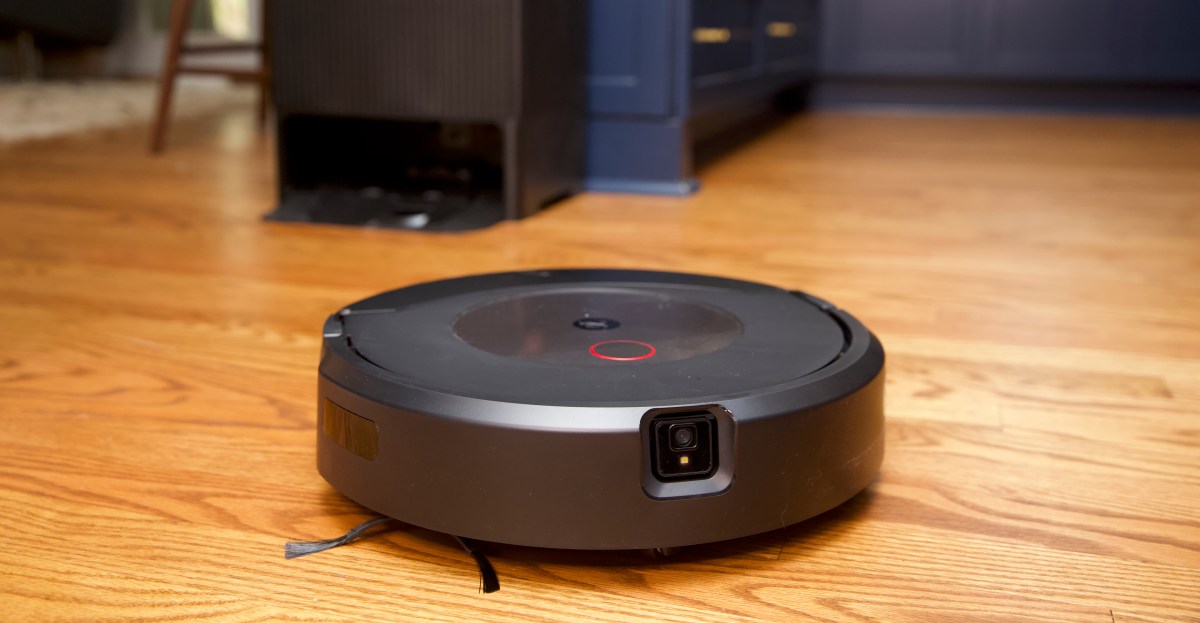
I wasn’t alone in my excitement. Robot vacuums quickly became a popular household product, and today most people refer to their floor-cleaning bots as Roombas, even if the vacuum picking up crumbs and pet hair was made by Ecovacs or Roborock. But despite its enduring popularity, the company behind Roomba filed for bankruptcy this week and will hand over control of its business to its Chinese manufacturing partner, Picea Robotics.
iRobot says it’s business as usual for the millions of Roombas in people’s homes, which will continue to function as expected — for now. But how did the most popular household robot company in the world fall so far and fall so spectacularly?
If you ask former CEO and iRobot cofounder Colin Angle, who stepped down in January 2024, the answer is simple: Government regulation killed iRobot. “It’s a blow for robotics and a tragic day for American innovation,” he said in an interview with The Verge. “This was our freaking market — we invented consumer robotics. We built this thing, we put it in a box, wrapped it up, and handed it to someone else. We did this to ourselves; this was a choiceful action that was not based on the merit and charge of antitrust.”
The “we” he’s referring to is the US government and, in turn, the European regulators who moved to block Amazon’s acquisition of iRobot in 2023 as they sought to rein in Big Tech. Others feel that iRobot failed to innovate, riding on its early success and fending off competition with its patent portfolio until it couldn’t. In reality, the answer lies somewhere in between, in a space where the vision for the future of the smart home meets the reality of what people actually need and want in their homes.
From the lab to your living room
iRobot was founded in 1990 by MIT roboticists, including Angle, Helen Greiner, and Rodney Brooks, as an AI company building a robotics platform. “It’s eerily congruent to certain platforms companies out there today,” says Angle. “We learned the hard way that it’s not until you can use that toolkit to create something that people want that there’s any value to it.”
While the idea of building a robot that could clean your home was always a goal, it wasn’t a possibility in the early days. “The promise of robotics was always Rosie from The Jetsons; the question was when this was going to happen,” says Angle. The team honed their expertise in partnerships with the government, which funded robots for space exploration (working on NASA’s Mars Sojourner Rover), mine detection, bomb disposal, search and rescue (its PackBot was used in 9/11 recovery efforts), and other military applications. Basically, it developed robots to go where humans shouldn’t or can’t.
“It’s a tragic day for American innovation. This was our freaking market — we invented consumer robotics.
It wasn’t until 1999 that the Massachusetts robotics startup had enough money to commit to developing a consumer cleaning product. iRobot engineer Joe Jones, also from MIT, and his team developed the company’s first floor-sweeping robot — the Roomba robot vacuum. It launched in 2002, selling for $200 at Brookstone, The Sharper Image, and Hammacher Schlemmer. “I remember getting a call from a Brookstone buyer, Pam, shortly after the launch, asking me how many more I could make,” says Angle. “That was the moment we realized something special was happening.”
The original Roomba was the first robot vacuum in the US, and the second ever made, following Electrolux’s Trilobite the year prior. A basic bump-and-roll bot with bump and cliff sensors, the Roomba rolled randomly around your home, sucking up dirt, bumping from wall to wall, and generally trying not to fall down stairs.
The company quickly doubled down on consumer robotics, delivering the Dirt Dog, a robotic shop vac designed to clean up shop debris, and the Looj and Verro, gutter- and pool-cleaning versions of the Roomba. iRobot went public in 2005 with a valuation of over $100 million, sold its security robotics arm, and branched out to robotic lawn mowing, developing the Terra in 2019. A couple of years later, it bought an air purification company, Aeris, for around $70 million. But Terra never launched, and Aeris didn’t make a dent in the Dyson-dominated air purifier market.
While iRobot was distracted by these side projects, competitors like Ecovacs, Roborock, Neato, Dyson, SharkNinja, and others were moving into the space. The company largely reacted by leveraging its impressive patent portfolio — key among them its dual-roller brushes, which finally expired in 2023. (It had rival robot maker MyGenie’s products pulled off the IFA trade show floor in 2013.) It also purchased competitor Evolution Robotics, maker of Mint, which became iRobot’s second successful home bot, the Braava robot mop (a follow-up to the flop that was the Scooba floor scrubber).
‘Fast followers’ start to close in
iRobot wasn’t sitting on its vacuuming laurels, as many critics claim. By 2015, iRobot had added Wi-Fi to its robots, developed an app for controlling them, and given them the ability to identify basic household objects and navigate around them. But its products were becoming much more expensive.
In 2018, it launched perhaps its best and, to that point, priciest product ever, the nearly $1,000 Roomba i7. This bot could map your home, remember that map, and let you clean specific rooms rather than just run around your home randomly. It could also empty its own dust bin — a huge upgrade. In many ways, the i7 was iRobot’s peak moment; it had hit an estimated 88 percent market share, and then it all started to go wrong.
In many ways, the i7 was iRobot’s peak moment.
iRobot’s soon-to-be biggest Chinese competitor, Roborock, entered the US market in 2018, following Ecovacs’ arrival a few years earlier. Many more were to come, and by 2022, iRobot’s market share was down to 30 percent. It had sold 40 million bots — 23.4 million in Europe and the Americas just in 2021. It had become a household name, the Kleenex of floor sweepers. And it was about to get blown out of the water.
“We had successfully out-competed the world for 17 years,” says Angle. “And now we were feeling more pressure from a new type of competition — the Chinese fast follower. They had certain advantages — access to capital, government support, and access to a closed market — China had become the largest market for robot vacuum cleaners in the world. And we were shut out.”
Despite a covid sales bump, the ensuing supply chain challenges and the impact of Trump’s 2018 tariffs led iRobot to temporarily raise prices, further opening the door for cheaper competitors. By 2022, iRobot’s revenue fell to $1.18 billion, then down to $891 million the next year, with an operating loss of $285 million.
Failure to innovate or innovative failure?

Critics have said iRobot failed to innovate fast enough and should have switched sooner from its vSLAM camera-based navigation and mapping system to laser-based lidar technology used by its competitors. Another criticism is that the company was too slow to adopt the popular combination mopping-and-vacuuming model. Angle concedes the latter: “Okay, we were wrong,” he says. “The consumer gets to vote, we were late to give them what they wanted — the convenience of a mopping and robot vacuum in one.”
But he is firm on iRobot’s camera-based navigation. New CEO Gary Cohen, who took over following Angle’s departure, switched to lidar within months of taking the helm. But Angle, who has since founded another robotics company, disagrees with the change and believes he was right. “Putting lidar on a vacuuming robot is a mistake,” he says. “It’s not a question of being non-innovative; we made an explicit decision not to do it because doing so is a crutch that makes your robot fragile and limits its utility.”
“Putting lidar on a vacuuming robot is a mistake.”
His vision for Roomba was to become a home robot that understood your house and cared about doing a good job. For that, it needed to see your home. “Building robots that care, that know when they missed a spot and will go back to make sure it’s done the job, requires a level of intelligence and perception that no lidar was going to do,” says Angle.
I’ve tested many dozens of robot vacuums and agree with Angle that cameras are the future for advanced robotic navigation in our homes. Roborock, Narwal, Dreame, and others have all added cameras to their flagship lidar bot vacs to enable AI-powered obstacle avoidance and dirt detection, features Roomba pioneered. The best robot vacuum I’ve tested this year, the Matic, uses entirely camera-based navigation.
However, we don’t all need an advanced, $1,000-plus home robot. There’s still a place for lidar in inexpensive, utilitarian robot vacuums that do a decent job of navigating your home without getting lost.
It was Angle’s vision for that smarter home robot, laid out in the company’s ambitious iRobot OS, that attracted Amazon’s $1.7 billion acquisition offer. As I wrote at the time, Amazon bought Roomba for its maps of your home — its ability to understand the context of a home environment. This could have been a crucial part of Amazon’s smart home ambitions with the revamped Alexa Plus, announced shortly after the acquisition was.
This sparked additional regulatory and consumer concerns about privacy, on top of perceived antitrust issues stemming from Amazon’s retail dominance. Eventually, both companies realized there was no path forward, and in 2024, they abandoned the deal. The process took nearly two years, and it was that corporate limbo that effectively killed iRobot, says Angle.

Following the deal’s collapse, Angle left, iRobot hired Cohen, shut down all side projects, and cut 31 percent of its workforce. By the end of 2024, revenue had dropped by nearly 50 percent. In March of this year, iRobot launched a new line of robot vacs that had little resemblance to the original Roombas. All use lidar navigation, are mostly combination mopping-and-vacuum bots, and are entirely unremarkable. The next day, the company warned investors that it might go bankrupt. Nine months later, it did.
“Even if iRobot emerges from bankruptcy as per its plans, that’s a very different company,” says Angle. If the Amazon deal had gone through, he believes, “It would have been a blossoming of tech innovation in the consumer robotics space and in the smart home in general.”
Instead, Angle sees iRobot’s bankruptcy as a tragic day for the “innovation economy.” “That idea that you can build a great company and then have access to M&A blocked has a chilling impact on investors’ willingness to take a gamble and on an entrepreneur’s courage to start down that journey fraught with risk.”
Political issues aside, I don’t believe iRobot failed to innovate; in many ways, it was ahead of its time. The company was captivated by a vision of the robotics future that now feels closer than ever — but it arrived too late for iRobot. Like many tech companies, it struggled to recognize and respond to what customers actually wanted, instead offering what it believed they deserved. Rosie the Robot may one day run our homes, and if it does, iRobot will have helped lay that foundation — even if it isn’t part of that future.
Follow topics and authors from this story to see more like this in your personalized homepage feed and to receive email updates.
Continue Reading
Artificial Intelligence
Ronnie Sheth, CEO, SENEN Group: Why now is the time for enterprise AI to ‘get practical'

Before you set sail on your AI journey, always check the state of your data – because if there is one thing likely to sink your ship, it is data quality.
Gartner estimates that poor data quality costs organisations an average of $12.9 million each year in wasted resources and lost opportunities. That’s the bad news. The good news is that organisations are increasingly understanding the importance of their data quality – and less likely to fall into this trap.
That’s the view of Ronnie Sheth, CEO of AI strategy, execution and governance firm SENEN Group. The company focuses on data and AI advisory, operationalisation and literacy, and Sheth notes she has been in the data and AI space ‘ever since [she] was a corporate baby’, so there is plenty of real-world experience behind the viewpoint. There is also plenty of success; Sheth notes that her company has a 99.99% client repeat rate.
“If I were to be very practical, the one thing I’ve noticed is companies jump into adopting AI before they’re ready,” says Sheth. Companies, she notes, will have an executive direction insisting they adopt AI, but without a blueprint or roadmap to accompany it. The result may be impressive user numbers, but with no measurable outcome to back anything up.
Even as recently as 2024, Sheth saw many organisations struggling because their data was ‘nowhere where it needed to be.’ “Not even close,” she adds. Now, the conversation has turned more practical and strategic. Companies are realising this, and coming to SENEN Group initially to get help with their data, rather than wanting to adopt AI immediately.
“When companies like that come to us, the first course of order is really fixing their data,” says Sheth. “The next course of order is getting to their AI model. They are building a strong foundation for any AI initiative that comes after that.
“Once they fix their data, they can build as many AI models as they want, and they can have as many AI solutions as they want, and they will get accurate outputs because now they have a strong foundation,” Sheth adds.
With breadth and depth in expertise, SENEN Group allows organisations to right their course. Sheth notes the example of one customer who came to them wanting a data governance initiative. Ultimately, it was the data strategy which was needed – the why and how, the outcomes of what they were trying to do with their data – before adding in governance and providing a roadmap for an operating model. “They’ve moved from raw data to descriptive analytics, moving into predictive analytics, and now we’re actually setting up an AI strategy for them,” says Sheth.
It is this attitude and requirement for practical initiatives which will be the cornerstone of Sheth’s discussion at AI & Big Data Expo Global in London this week. “Now would be the time to get practical with AI, especially enterprise AI adoption, and not think about ‘look, we’re going to innovate, we’re going to do pilots, we’re going to experiment,’” says Sheth. “Now is not the time to do that. Now is the time to get practical, to get AI to value. This is the year to do that in the enterprise.”
Watch the full video conversation with Ronnie Sheth below:

Greg Holmes, Field CTO for EMEA at Apptio, an IBM company, argues that successfully scaling intelligent automation requires financial rigour.
The “build it and they will come” model of technology adoption often leaves a hole in the budget when applied to automation. Executives frequently find that successful pilot programmes do not translate into sustainable enterprise-wide deployments because initial financial modelling ignored the realities of production scaling.
“When we integrate FinOps capabilities with automation, we’re looking at a change from being very reactive on cost management to being very proactive around value engineering,” says Holmes.
This shifts the assessment criteria for technical leaders. Rather than waiting “months or years to assess whether things are getting value,” engineering teams can track resource consumption – such as cost per transaction or API call – “straight from the beginning.”
The unit economics of scaling intelligent automation
Innovation projects face a high mortality rate. Holmes notes that around 80 percent of new innovation projects fail, often because financial opacity during the pilot phase masks future liabilities.
“If a pilot demonstrates that automating a process saves, say, 100 hours a month, leadership thinks that’s really successful,” says Holmes. “But what it fails to track is that the pilot sometimes is running on over-provisioned infrastructure, so it looks like it performs really well. But you wouldn’t over-provision to that degree during a real production rollout.”
Moving that workload to production changes the calculus. The requirements for compute, storage, and data transfer increase. “API calls can multiply, exceptions and edge cases appear at volume that might have been out of scope for the pilot phase, and then support overheads just grow as well,” he adds.
To prevent this, organisations must track the marginal cost at scale. This involves monitoring unit economics, such as the cost per customer served or cost per transaction. If the cost per customer increases as the customer base grows, the business model is flawed.
Conversely, effective scaling should see these unit costs decrease. Holmes cites a case study from Liberty Mutual where the insurer was able to find around $2.5 million of savings by bringing in consumption metrics and “not just looking at labour hours that they were saving.”
However, financial accountability cannot sit solely with the finance department. Holmes advocates for putting governance “back in the hands of the developers into their development tools and workloads.”
Integration with infrastructure-as-code tools like HashiCorp Terraform and GitHub allows organisations to enforce policies during deployment. Teams can spin up resources programmatically with immediate cost estimates.
“Rather than deploying things and then fixing them up, which gets into the whole whack-a-mole kind of problem,” Holmes explains, companies can verify they are “deploying the right things at the right time.”
When scaling intelligent automation, tension often simmers between the CFO, who focuses on return on investment, and the Head of Automation, who tracks operational metrics like hours saved.
“This translation challenge is precisely what TBM (Technology Business Management) and Apptio are designed to solve,” says Holmes. “It’s having a common language between technology and finance and with the business.”
The TBM taxonomy provides a standardised framework to reconcile these views. It maps technical resources (such as compute, storage, and labour) into IT towers and further up to business capabilities. This structure translates technical inputs into business outputs.
“I don’t necessarily know what goes into all the IT layers underneath it,” Holmes says, describing the business user’s perspective. “But because we’ve got this taxonomy, I can get a detailed bill that tells me about my service consumption and precisely which costs are driving it to be more expensive as I consume more.”
Addressing legacy debt and budgeting for the long-term
Organisations burdened by legacy ERP systems face a binary choice: automation as a patch, or as a bridge to modernisation. Holmes warns that if a company is “just trying to mask inefficient processes and not redesign them,” they are merely “building up more technical debt.”
A total cost of ownership (TCO) approach helps determine the correct strategy. The Commonwealth Bank of Australia utilised a TCO model across 2,000 different applications – of various maturity stages – to assess their full lifecycle costs. This analysis included hidden costs such as infrastructure, labour, and the engineering time required to keep automation running.
“Just because of something’s legacy doesn’t mean you have to retire it,” says Holmes. “Some of those legacy systems are worth maintaining just because the value is so good.”
In other cases, calculating the cost of the automation wrappers required to keep an old system functional reveals a different reality. “Sometimes when you add up the TCO approach, and you’re including all these automation layers around it, you suddenly realise, the real cost of keeping that old system alive is not just the old system, it’s those extra layers,” Holmes argues.
Avoiding sticker shock requires a budgeting strategy that balances variable costs with long-term commitments. While variable costs (OPEX) offer flexibility, they can fluctuate wildly based on demand and engineering efficiency.
Holmes advises that longer-term visibility enables better investment decisions. Committing to specific technologies or platforms over a multi-year horizon allows organisations to negotiate economies of scale and standardise architecture.
“Because you’ve made those longer term commitments and you’ve standardised on different platforms and things like that, it makes it easier to build the right thing out for the long term,” Holmes says.
Combining tight management of variable costs with strategic commitments supports enterprises in scaling intelligent automation without the volatility that often derails transformation.
IBM is a key sponsor of this year’s Intelligent Automation Conference Global in London on 4-5 February 2026. Greg Holmes and other experts will be sharing their insights during the event. Be sure to check out the day one panel session, Scaling Intelligent Automation Successfully: Frameworks, Risks, and Real-World Lessons, to hear more from Holmes and swing by IBM’s booth at stand #362.
See also: Klarna backs Google UCP to power AI agent payments

Want to learn more about AI and big data from industry leaders? Check out AI & Big Data Expo taking place in Amsterdam, California, and London. The comprehensive event is part of TechEx and is co-located with other leading technology events including the Cyber Security & Cloud Expo. Click here for more information.
AI News is powered by TechForge Media. Explore other upcoming enterprise technology events and webinars here.

FedEx is using AI to change how package tracking and returns work for large enterprise shippers. For companies moving high volumes of goods, tracking no longer ends when a package leaves the warehouse. Customers expect real-time updates, flexible delivery options, and returns that do not turn into support tickets or delays.
That pressure is pushing logistics firms to rethink how tracking and returns operate at scale, especially across complex supply chains.
This is where artificial intelligence is starting to move from pilot projects into daily operations.
FedEx plans to roll out AI-powered tracking and returns tools designed for enterprise shippers, according to a report by PYMNTS. The tools are aimed at automating routine customer service tasks, improving visibility into shipments, and reducing friction when packages need to be rerouted or sent back.
Rather than focusing on consumer-facing chatbots, the effort centres on operational workflows that sit behind the scenes. These are the systems enterprise customers rely on to manage exceptions, returns, and delivery changes without manual intervention.
How FedEx is applying AI to package tracking
Traditional tracking systems tell customers where a package is and when it might arrive. AI-powered tracking takes a step further by utilising historical delivery data, traffic patterns, weather conditions, and network constraints to flag potential delays before they happen.
According to the PYMNTS report, FedEx’s AI tools are designed to help enterprise shippers anticipate issues earlier in the delivery process. Instead of reacting to missed delivery windows, shippers may be able to reroute packages or notify customers ahead of time.
For businesses that ship thousands of parcels per day, that shift matters. Small improvements in prediction accuracy can reduce support calls, lower refund rates, and improve customer trust, particularly in retail, healthcare, and manufacturing supply chains.
This approach also reflects a broader trend in enterprise software, in which AI is being embedded into existing systems rather than introduced as standalone tools. The goal is not to replace logistics teams, but to minimise the number of manual decisions they need to make.
Returns as an operational problem, not a customer issue
Returns are one of the most expensive parts of logistics. For enterprise shippers, particularly those in e-commerce, returns affect warehouse capacity, inventory planning, and transportation costs.
According to PYMNTS, FedEx’s AI-enabled returns tools aim to automate parts of the returns process, including label generation, routing decisions, and status updates. Companies that use AI to determine the most efficient return path may be able to reduce delays and avoid returning things to the wrong facility.
This is less about convenience and more about operational discipline. Returns that sit idle or move through the wrong channel create cost and uncertainty across the supply chain. AI systems trained on past return patterns can help standardise decisions that were previously handled case by case.
For enterprise customers, this type of automation supports scale. As return volumes fluctuate, especially during peak seasons, systems that adjust automatically reduce the need for temporary staffing or manual overrides.
What FedEx’s AI tracking approach says about enterprise adoption
What stands out in FedEx’s approach is how narrowly focused the AI use case is. There are no broad claims about transformation or reinvention. The emphasis is on reducing friction in processes that already exist.
This mirrors how other large organisations are adopting AI internally. In a separate context, Microsoft described a similar pattern in its article. The company outlined how AI tools were rolled out gradually, with clear limits, governance rules, and feedback loops.
While Microsoft’s case focused on knowledge work and FedEx’s on logistics operations, the underlying lesson is the same. AI adoption tends to work best when applied to specific activities with measurable results rather than broad promises of efficiency.
For logistics firms, those advantages include fewer delivery exceptions, lower return handling costs, and better coordination between shipping partners and enterprise clients.
What this signals for enterprise customers
For end-user companies, FedEx’s move signals that logistics providers are investing in AI as a way to support more complex shipping demands. As supply chains become more distributed, visibility and predictability become harder to maintain without automation.
AI-driven tracking and returns could also change how businesses measure logistics performance. Companies may focus less on delivery speed and more on how quickly issues are recognised and resolved.
That shift could influence procurement decisions, contract structures, and service-level agreements. Enterprise customers may start asking not just where a shipment is, but how well a provider anticipates problems.
FedEx’s plans reflect a quieter phase of enterprise AI adoption. The focus is less on experimentation and more on integration. These systems are not designed to draw attention but to reduce noise in operations that customers only notice when something goes wrong.
(Photo by Liam Kevan)
See also: PepsiCo is using AI to rethink how factories are designed and updated
Want to learn more about AI and big data from industry leaders? Check out AI & Big Data Expo taking place in Amsterdam, California, and London. The comprehensive event is part of TechEx and is co-located with other leading technology events, click here for more information.
AI News is powered by TechForge Media. Explore other upcoming enterprise technology events and webinars here.
-

 Fintech6 months ago
Race to Instant Onboarding Accelerates as FDIC OKs Pre‑filled Forms | PYMNTS.com
-

 Cyber Security7 months ago
Hackers Use GitHub Repositories to Host Amadey Malware and Data Stealers, Bypassing Filters
-
Fintech6 months ago
DAT to Acquire Convoy Platform to Expand Freight-Matching Network’s Capabilities | PYMNTS.com
-

 Fintech5 months ago
ID.me Raises $340 Million to Expand Digital Identity Solutions | PYMNTS.com
-

 Artificial Intelligence7 months ago
Nothing Phone 3 review: flagship-ish
-

 Artificial Intelligence7 months ago
The best Android phones
-

 Fintech4 months ago
Tracking the Convergence of Payments and Digital Identity | PYMNTS.com
-

 Fintech7 months ago
Intuit Adds Agentic AI to Its Enterprise Suite | PYMNTS.com