
The forthcoming Galaxy Z Fold 7 is Samsung’s thinnest foldable yet. Our own Allison Johnson just published her full review ahead of the phone’s launch on July 25th, and while there’s certainly no denying it’s a spendy device, know that various carriers and retailers are offering a host of preorder incentives, many of which will expire at launch.
Artificial Intelligence
Here’s how to save on a Samsung Galaxy Z Fold 7 preorder


Although the Z Fold 7 isn’t miles ahead of last-gen Z Fold 6 in terms of performance, it measures just 8.9mm thick when folded, making it look and feel like something of a next-gen foldable. The outer screen has also increased in size from 6.3 inches to 6.5 inches, which, when taken into account alongside its thickness, makes the Z Fold 7 feel more akin to a normal phone when folded. Alas, if only it had a “normal phone” price tag instead of an exuberant starting price of $1,999.
That being said, it’s still possible to save on a preorder purchase, or at the very least receive some credit you can then spend on accessories like the Galaxy Watch 8. Whether you plan to shop directly through Samsung, your carrier, or a traditional retailer, here are the biggest promotions along with the key details you’ll want to keep in mind.
You can get up to $1,100 in trade-in credit
The current trade-in savings are big enough to chop the Z Fold 7’s $1,999.99 price tag in half. Ahead of its release on July 25th, Samsung is offering up to $1,000 in credit for the last-gen Z Fold 6 and S25 Ultra — or less, if you’re trading in an older phone. Samsung will give you an instant discount based on the estimated value of your trade-in, which lowers the out-of-pocket cost to $999.99. That’s great, and thankfully, you can get instant trade-in credit even if you’re activating the phone on Verizon or AT&T through Samsung’s site. But that’s not how trade-in credit works if you’re buying directly through carriers.
Carriers across the board are currently offering a $1,100 trade-in credit toward the Z Fold 7, which will be paid back in the form of monthly installments. AT&T will provide $1,100 in credits over 36 months to customers on postpaid unlimited plans who purchase the new phone with an installment plan. As for the phones that AT&T is currently accepting, they include any Galaxy S, Note, and S-series phone, regardless of its age or condition.
Verizon is also offering up to $1,100 in monthly credits over 36 months with an eligible trade-in in “any condition,” although the carrier doesn’t list or even mention any eligible phones. You must also be on an Unlimited Ultimate plan to get that much credit.
T-Mobile is offering up to $1,100 in monthly credits for those auto-paying for a plan that costs $85 or more per month — no trade-in required.
Samsung is offering a lot of bonus credit, with a small catch
If you’re preordering directly through Samsung, you will receive a $50 Samsung credit to use on accessories as an extra perk. Those who aren’t trading in a device will get an extra $300 to spend, totaling $350. However, the credit is “use it or lose it,” so to speak; you’ll forfeit it all if you don’t use it at checkout. So, if you do go this route, you’ll want to pick up a pair of earbuds, a case, a Galaxy Watch 8, etc etc.
Keep in mind that the aforementioned credit is exclusive to Samsung’s online storefront and isn’t available when purchasing the Galaxy Z Fold 7 through a carrier, Best Buy, Amazon, or any other retailer.
Not all carriers are offering a free storage upgrade right now
Some retailers, but not all, are offering the 512GB Z Fold 7 for no extra charge through July 24th. This includes Samsung, T-Mobile, Best Buy, and Amazon, the latter of which is also throwing in a $300 Amazon gift card with each purchase. However, AT&T and Verizon aren’t, at least through their respective sites. They each are offering the 256GB model at the same $1,999 price that you can get the 512GB model for elsewhere. That said, activating the Z Fold 7 via Best Buy will allow you to purchase the 512GB variant for $1,899.99 as a one-time payment (or as a $55.55-a-month payment for 36 months).
Continue Reading

Klarna aims to address the lack of interoperability between conversational AI agents and backend payment systems by backing Google’s Universal Commerce Protocol (UCP), an open standard designed to unify how AI agents discover products and execute transactions.
The partnership, which also sees Klarna supporting Google’s Agent Payments Protocol (AP2), places the Swedish fintech firm among the early payment providers to back a standardised framework for automated shopping.
The interoperability problem with AI agent payments
Current implementations of AI commerce often function as walled gardens. An AI agent on one platform typically requires a custom integration to communicate with a merchant’s inventory system, and yet another to process payments. This integration complexity inflates development costs and limits the reach of automated shopping tools.
Google’s UCP attempts to solve this by providing a standardised interface for the entire shopping lifecycle, from discovery and purchase to post-purchase support. Rather than building unique connectors for every AI platform, merchants and payment providers can interact through a unified standard.
David Sykes, Chief Commercial Officer at Klarna, states that as AI-driven shopping evolves, the underlying infrastructure must rely on openness, trust, and transparency. “Supporting UCP is part of Klarna’s broader work with Google to help define responsible, interoperable standards that support the future of shopping,” he explains.
Standardising the transaction layer
By integrating with UCP, Klarna allows its technology – including flexible payment options and real-time decisioning – to function within these AI agent environments. This removes the need for hardcoded platform-specific payment logic. Open standards provide a framework for the industry to explore how discovery, shopping, and payments work together across AI-powered environments.
The implications extend to how transactions settle. Klarna’s support for AP2 complements the UCP integration, helping advance an ecosystem where trusted payment options work across AI-powered checkout experiences. This combination aims to reduce the friction of users handing off a purchase decision to an automated agent.
“Open standards like UCP are essential to making AI-powered commerce practical at scale,” said Ashish Gupta, VP/GM of Merchant Shopping at Google. “Klarna’s support for UCP reflects the kind of cross-industry collaboration needed to build interoperable commerce experiences that expand choice while maintaining security.”
Adoption of Google’s UCP by Klarna is part of a broader shift
For retail and fintech leaders, the adoption of UCP by players like Klarna suggests a requirement to rethink commerce architecture. The shift implies that future payments may increasingly come through sources where the buyer interface is an AI agent rather than a branded storefront.
Implementing UCP generally does not require a complete re-platforming but does demand rigorous data hygiene. Because agents rely on structured data to manage transactions, the accuracy of product feeds and inventory levels becomes an operational priority.
Furthermore, the model maintains a focus on trust. Klarna’s technology provides upfront terms designed to build trust at checkout. As agent-led commerce develops, maintaining clear decisioning logic and transparency remains a priority for risk management.
The convergence of Klarna’s payment rails with Google’s open protocols offers a practical template for reducing the friction of using AI agents for commerce. The value lies in the efficiency of a standardised integration layer that reduces the technical debt associated with maintaining multiple sales channels. Success will likely depend on the ability to expose business logic and inventory data through these open standards.
See also: How SAP is modernising HMRC’s tax infrastructure with AI
Want to learn more about AI and big data from industry leaders? Check out AI & Big Data Expo taking place in Amsterdam, California, and London. The comprehensive event is part of TechEx and is co-located with other leading technology events including the Cyber Security & Cloud Expo. Click here for more information.
AI News is powered by TechForge Media. Explore other upcoming enterprise technology events and webinars here.

HMRC has selected SAP to overhaul its core revenue systems and place AI at the centre of the UK’s tax administration strategy.
The contract represents a broader shift in how public sector bodies approach automation. Rather than layering AI tools over legacy infrastructure, HMRC is replacing the underlying architecture to support machine learning and automated decision-making natively.
The AI-powered modernisation effort focuses on the Enterprise Tax Management Platform (ETMP), the technological backbone responsible for managing over £800 billion in annual tax revenue and which currently supports over 45 tax regimes. By migrating this infrastructure to a managed cloud environment via RISE with SAP, HMRC aims to simplify a complex technology landscape that tens of thousands of staff rely on daily.
Effective machine learning requires unified data sets, which are often impossible to maintain across fragmented on-premise legacy systems. As part of the deployment, HMRC will implement SAP Business Technology Platform and AI capabilities. These tools are designed to surface insights faster and automate processes across tax administration.
SAP Sovereign Cloud meets local AI adoption requirements
Deploying AI in such highly-regulated sectors requires strict data governance. HMRC will host these new capabilities on SAP’s UK Sovereign Cloud. This ensures that while the tax authority adopts commercial AI tools, it adheres to localised requirements regarding data residency, security, and compliance.
“Large-scale public systems like those delivered by HMRC must operate reliably at national scale while adapting to changing demands,” said Leila Romane, Managing Director UKI at SAP.
“By modernising one of the UK’s most important platforms and hosting it on a UK sovereign cloud, we are helping to strengthen the resilience, security, and sustainability of critical national infrastructure.”
Using AI to modernise tax infrastructure
The modernisation ultimately aims to reduce friction in taxpayer interactions. SAP and HMRC will work together to define new AI capabilities specifically aimed at improving taxpayer experiences and enhancing decision-making.
For enterprise leaders, the lesson here is the link between data accessibility and operational value. The collaboration provides HMRC employees with better access to analytical data and an improved user interface. This structure supports greater confidence in real-time analysis and reporting; allowing for more responsive and transparent experiences for taxpayers.
The SAP project illustrates that AI adoption is an infrastructure challenge as much as a software one. HMRC’s approach involves securing a sovereign cloud foundation before attempting to scale automation. For executives, this underscores the need to address technical debt and data sovereignty to enable effective AI implementation in areas as regulated as tax and finance.
See also: Accenture: Insurers betting big on AI
Want to learn more about AI and big data from industry leaders? Check out AI & Big Data Expo taking place in Amsterdam, California, and London. The comprehensive event is part of TechEx and is co-located with other leading technology events including the Cyber Security & Cloud Expo. Click here for more information.
AI News is powered by TechForge Media. Explore other upcoming enterprise technology events and webinars here.

If you are a data and analytics leader, then you know agentic AI is fuelling unprecedented speed of change right now. Knowing you need to do something and knowing what to do, however, are two different things. The good news is providers like ThoughtSpot are able to assist, with the company in its own words determined to ‘reimagin[e] analytics and BI from the ground up’.
“Certainly, agentic systems really are shifting us into very new territory,” explains Jane Smith, field chief data and AI officer at ThoughtSpot. “They’re shifting us away from passive reporting to much more active decision making.
“Traditional BI waits for you to find an insight,” adds Jane. “Agentic systems are proactively monitoring data from multiple sources 24/7; they’re diagnosing why changes happened; they’re triggering the next action automatically.
“We’re getting much more action-oriented.”
Alongside moving from passive to active, there are two other ways in which Jane sees this change taking place in BI. There is a shift towards the ‘true democratisation of data’ on one hand, but on the other is the ‘resurgence of focus’ on the semantic layer. “You cannot have an agent taking action in the way I just described when it doesn’t strictly understand business context,” says Jane. “A strong semantic layer is really the only way to make sense… of the chaos of AI.”
ThoughtSpot has a fleet of agents to take action and move the needle for customers. In December, the company launched four new BI agents, with the idea that they work as a team to deliver modern analytics.
Spotter 3, the latest iteration of an agent first debuted towards the end of 2024, is the star. It is conversant with applications like Slack and Salesforce, and can not only answer questions, but assess the quality of its answer and keep trying until it gets the right result.
“It leverages the [Model Context] protocol, so you can ask your questions to your organisation’s structured data – everything in your rows, your columns, your tables – but also incorporate your unstructured data,” says Jane. “So, you can get really context-rich answers to questions, all through our agent, or if you wish, through your own LLM.”
With this power, however, comes responsibility. As ThoughtSpot’s recent eBook exploring data and AI trends for 2026 notes, the C-suite needs to work out how to design systems so every decision – be it human or AI – can be explained, improved, and trusted.
ThoughtSpot calls this emerging architecture ‘decision intelligence’ (DI). “What we’ll see a lot of, I think, will be decision supply chains,” explains Jane. “Instead of a one-off insight, I think what we’re going to see is decisions… flow through repeatable stages, data analysis, simulation, action, feedback, and these are all interactions between humans and machines that will be logged in what we can think of as a decision system of record.”
What would this look like in practice? Jane offers an example from a clinical trial in the pharma industry. “The system would log and version, really, every step of how a patient is chosen for a clinical trial; how data from a health record is used to identify a candidate; how that decision was simulated against the trial protocol; how the matching occurred; how potentially a doctor ultimately recommended this patient for the trial,” she says.
“These are processes that can be audited, they can be improved for the following trial. But the very meticulous logging of every element of the flow of this decision into what we think of as a supply chain is a way that I would visualise that.”
ThoughtSpot is participating at the AI & Big Data Expo Global, in London, on February 4-5. You can watch the full interview with Jane Smith below:
Photo by Steve Johnson on Unsplash
-

 Fintech6 months ago
Race to Instant Onboarding Accelerates as FDIC OKs Pre‑filled Forms | PYMNTS.com
-

 Cyber Security7 months ago
Hackers Use GitHub Repositories to Host Amadey Malware and Data Stealers, Bypassing Filters
-
Fintech6 months ago
DAT to Acquire Convoy Platform to Expand Freight-Matching Network’s Capabilities | PYMNTS.com
-

 Fintech5 months ago
ID.me Raises $340 Million to Expand Digital Identity Solutions | PYMNTS.com
-

 Artificial Intelligence7 months ago
Nothing Phone 3 review: flagship-ish
-

 Artificial Intelligence7 months ago
The best Android phones
-
 Fintech3 months ago
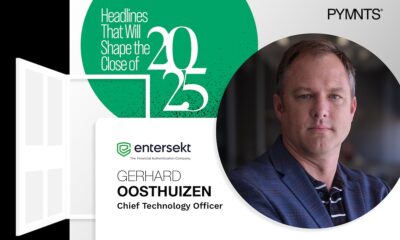
Tracking the Convergence of Payments and Digital Identity | PYMNTS.com
-

 Fintech7 months ago
Intuit Adds Agentic AI to Its Enterprise Suite | PYMNTS.com