Connect with us

Fintech

CurbWaste Uses AI and Data to Modernize the $1 Trillion Waste Industry | PYMNTS.com

Published

on

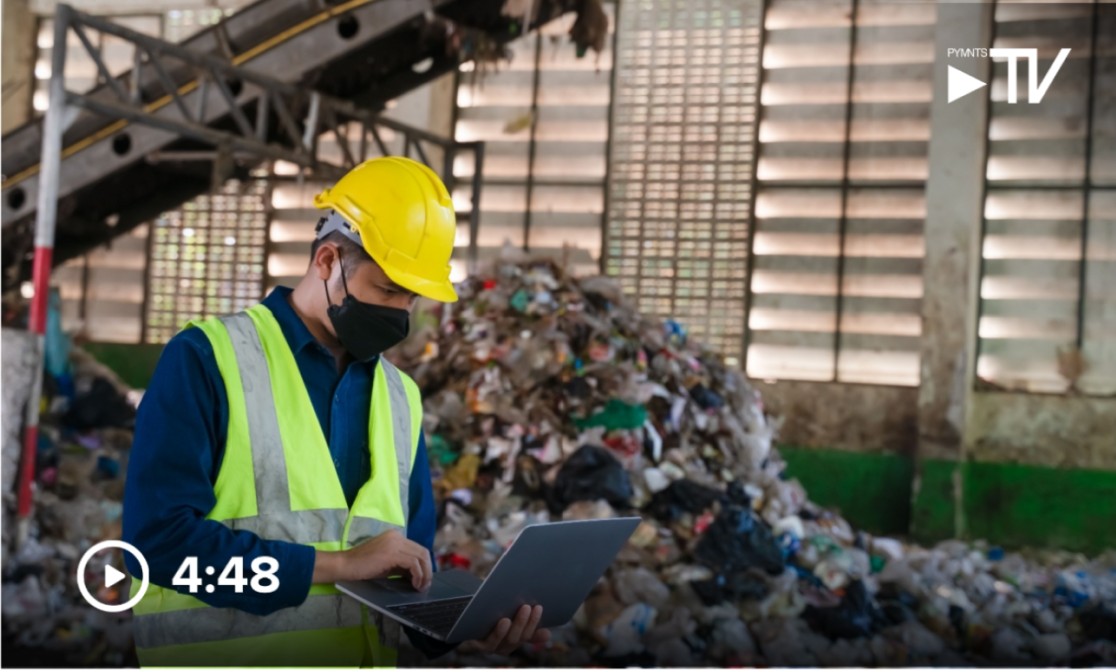
Technology and data are remaking even the most essential and overlooked service, including waste hauling. It’s an industry that quietly keeps cities and towns running, moving construction debris, recycling and household refuse every day.

Despite its scale, and a trillion dollar market with $32 billion in fund flows, according to CurbWaste CEO Mike Marmo, it remains one of the most fragmented sectors in the U.S. Waste hauling is dominated by family-run haulers who still rely on paper tickets, clipboards and spreadsheets to track routes, trucks and payments, and just getting started is a long journey, as trucks can cost $300,000 each.

Marmo knows that world intimately. “We set out to build a waste company in New York. My family had been in the business for four generations,” he told PYMNTS CEO Karen Webster. “When we started to seek out technology, we really weren’t able to find anything that gave us an edge or made us more data-driven. So we decided to build it ourselves.”

Heavy Costs, Thin Margins, and the Economics of Waste

Haulers face those pressures daily, he added, because the industry’s economics are inherently inefficient.  Webster noted that the waste sector’s biggest challenge lies with inertia. Webster observed that  mom and pop businesses, multi-generational businesses, may be daunted by the change from paper and pencil and Excel spreadsheets, eyeing it as a heavy lift.

But modernization is necessary. “Technology used to be a nice-to-have. Now it’s a must-have,” Marmo replied. “We’re truly in an industrial revolution at the moment, so it’s even more critical to be at the forefront of it.”

Advertisement: Scroll to Continue

Change is hard, Marmo acknowledged. But digitization, he said, turns information that once sat in file drawers into actionable insight. “Software allows you to get visibility into your business in a way that you can’t do otherwise,” he told Webster.

The Role of AI and Integration

CurbWaste centralizes customer orders, dispatching, driver apps, invoicing and reporting, tied to what Marmo called “implied AI” — technology that works quietly in the background to automate repetitive, manual tasks.

That includes capturing and codifying “tribal knowledge” from dispatchers who understand local routes and customers. “AI allows you to consume that information and then spit out a more proactive decision-making process.”

The goal, Marmo said, is an integrated operating system for haulers. “Waste is always local. Everybody’s picking up garbage relatively similarly, however, the communities … are very different.” CurbWaste’s platform standardizes those data flows so haulers can meet varied municipal and environmental reporting requirements. “Anything that we can do to help them normalize that data and then visualize it … and save that in a format that can be presented or automated completely is really powerful.”

Building a Network and Scaling It

Beyond software, Marmo said CurbWaste is helping haulers connect and learn from one another. “ The younger people coming into the industry … have a thirst for learning and they really want to improve this industry in a meaningful way,” he told Webster.

That community focus extends to the company’s next phase. CurbWaste recently raised $28 million in Series B funding, led by Socium Ventures, backed by Cox Enterprises, with participation from Flourish Ventures, TTV Capital, B Capital Group and Squarepoint, bringing its total funding to $50 million.

“We’re going to continue to invest in the data and analytics and give customers more AI-powered business intelligence,” Marmo said. “But more than anything, our brand will stand for community … we’re going to build something that’s really powerful, and these waste haulers are going to be better for it.”


PYMNTS CEO Karen Webster is one of the world’s leading experts in payments innovation and the digital economy, advising multinational companies and sitting on boards of emerging AI, healthtech and real-time payments firms, including a non-executive director on the Sezzle board, a publicly traded BNPL provider. She founded PYMNTS.com in 2009, a top media platform covering innovation in payments, commerce and the digital economy. Webster is also the author of the NEXT newsletter and a co-founder of Market Platform Dynamics, specializing in driving and monetizing innovation across industries. 

Mike Marmo is the founder and CEO of CurbWaste, a former fourth-generation waste hauler who created the company to digitize and modernize the operations of independent haulers across the U.S.

Continue Reading
Click to comment

Leave a Reply

Your email address will not be published. Required fields are marked *

Fintech

Speed Raises $8 Million to Expand Bitcoin and Stablecoin Payment Solutions | PYMNTS.com

Published

on

The company will use the new funding to build capacity, expand to new regions, develop more merchant tools, enable cross-border and creator payouts, and maintain reliability and compliance, it said in a Tuesday (Dec. 16) blog post.

Speed’s offerings include a global payment layer called Speed Merchant that is designed for merchants, platforms and payment systems and enables them to accept both Bitcoin and stablecoins, according to the post.

The company also offers a Lightning wallet called Speed Wallet that serves individuals and businesses and enables Bitcoin and stablecoin transfers, supports global payouts, offers local on- and off-ramps, and powers USDT transactions, the post said.

“We’ve always believed that Bitcoin and stablecoins can power everyday payments,” Speed CEO Niraj Patel said in the post. “That requires real infrastructure—fast, compliant and scalable. This investment validates that belief and accelerates our mission.”

Speed co-founder Jayneel Patel said in the post that the company aims to “solve real problems with technology.”

Advertisement: Scroll to Continue

“Speed started as a merchant solution and has grown into a global payment network,” Jayneel Patel said, adding the company is “ready to take the next leap.”

Stablecoin issuer Tether and venture fund ego death capital co-led the funding round, per the post.

Tether said in a Tuesday press release that its investment supports its strategy to support Bitcoin-aligned financial infrastructure and expand the utility of its USDT stablecoin in real-world payment environments.

“We support teams building practical infrastructure that reduces friction in payments and expands access to reliable settlement rails,” Tether CEO Paolo Ardoino said in the release.

Tether’s USDT stablecoin is the most traded cryptocurrency by volume around the world.

Adam Gebner, associate at ego death capital, said in a Tuesday blog post that Speed processed over $1.5 billion in payment volume over the past 12 months and serves more than 1.2 million users.

“By bridging Lightning and stablecoins in a single, compliant platform, Speed is positioning itself as foundational infrastructure for the Bitcoin and stablecoin economy, serving merchants, platforms and users across both developed and emerging markets,” Gebner said in the post.

Continue Reading

Fintech

Databricks Targets $134 Billion Valuation in New Funding Round | PYMNTS.com

Published

on

Data analytics/artificial intelligence (AI) firm Databricks is reportedly raising $4 billion in a new funding round.

This Series L round would value the company at $134 billion, up 34% from its last session of funding during the summer, the Wall Street Journal (WSJ) reported Tuesday (Dec. 16).

Ali Ghodsi, Databricks’ co-founder and CEO, told the WSJ the company plans to use the new funding to invest in its core data-analytics products and AI software, while also letting its workers engage in secondary share sales.

The company, among the most valuable private firms in Silicon Valley, also plans to hire around 600 fresh college graduates in 2026, the CEO added, in addition to adding thousands of new jobs worldwide in Asia, Latin America and Europe. It also plans to hire AI researchers, who are typically paid top salaries, the WSJ added.

The report noted that Databricks has benefited from the AI boom, which relies partially on private corporate data to customize AI models. Databricks told the WSJ that its data-warehousing product, which can serve as an underlying data platform for AI services, surpassed a $1 billion revenue run rate at the end of October.

This year has seen Databricks ink deals with OpenAI and Anthropic to help sell AI services to business customers. Each of these partnerships are designed to push clients to develop AI agents, or independent bots that can carry out tasks on behalf of humans.

Advertisement: Scroll to Continue

The company’s new funding round comes three months after Databricks’ Series K round, which valued it more than $100 billion, up from $62 billion at the start of the year.

In other AI news, PYMNTS wrote earlier this week about The General Intelligence Company of New York, a start up developing agent-based systems designed to take over large portions of company operations.

“The company’s name deliberately evokes Gilded Age ambition, and founder Andrew Pignanelli told PYMNTS that the reference was intentional,” that report said. “He said he views AI as foundational infrastructure for the next era of company-building, much as railroads and industrial capital reshaped the United States economy more than a century ago.”

The company started by working backward from “the one-person billion-dollar business,” as Pignanelli termed it.

“We started at the end, the actual one-person billion-dollar company, and worked our way back and we were like, ‘What can we do today?’” he said.

Continue Reading

Fintech

Apple App Store Fees Face Pressure From EU Developers | PYMNTS.com

Published

on

A collection of app developers and consumer groups want Europe to enforce laws against Apple.

The Coalition of App Fairness (CAF) on Monday (Dec. 15) issued an open letter to the European Commission (EC) accusing the tech giant of “persistent” non-compliance with Europe’s Digital Markets Act (DMA).

The letter follows findings from the EC that Apple had violated the DMA by keeping developers from directing users to alternative payment methods, fining the tech giant $588 million.

Apple in turn revised its terms for its app store to impose fees that ranged from from 13% for smaller businesses to up to 20% for App Store purchases. However, the CAF says Apple has not addressed what it calls a core issue: the company’s fees are preventing fair competition.

“The law says that gatekeepers like Apple must allow developers to offer and conduct transactions outside of the App Store free of charge,” the letter said. “However, Apple is now charging developers commission, fees of up to 20% for such transactions. This is a blatant disregard for the law with the potential to vanquish years of meaningful work by the Commission.”

The CAF also notes that Apple plans to introduce new terms and conditions for the App Store next month, and says it suspects the new terms will include fees that violate the DMA.

Advertisement: Scroll to Continue

“Apple cannot be permitted to exploit its gatekeeper position by holding the entire industry hostage,” the letter added.

PYMNTS has contacted Apple for comment but has not yet gotten a reply. The company had in September called on the commission to rethink the DMA, which was created to prevent market abuse by tech giants doing business in Europe.

“Over that time, it’s become clear that the DMA is leading to a worse experience for Apple users in the EU,” Apple wrote in a blog post. “It’s exposing them to new risks, and disrupting the simple, seamless way their Apple products work together. And as new technologies come out, our European users’ Apple products will only fall further behind.”

In its blog post, Apple argued the DMA requirements for allowing other app marketplaces and alternative payment systems don’t take into account the privacy and security standards of the App Store, putting customers at risk for being overcharged or scammed.

“The DMA also lets other companies request access to user data and core technologies of Apple products,” the company wrote. “Apple is required to meet almost every request, even if they create serious risks for our users.”

Continue Reading

Trending