Or the June announcement that Siri’s AI-powered reboot, already a year overdue, won’t arrive until mid-2026. Two years after Apple Intelligence’s public debut landed with a thud.
Or maybe it’s the nine-figure AI talent drain to Meta and the billions of dollars in acquisitions by Google happening just as investors digest reports that Apple has spent $10 billion chasing AI, with $5 billion more burned annually across 30 acquisitions.
Apple’s investors are now nervous.
They should be.
Apple’s Gen AI Misfire
Apple Intelligence doesn’t appear in any serious public Gen AI rankings. It lags behind even X.ai’s Grok. That’s not a public relations problem. It’s a strategic misstep. Maybe even a crater-sized hole that could prove Apple’s fatal flaw.
Apple is 2025’s worst-performing Big Tech stock, down almost 15% to date. Microsoft, Nvidia and Meta are all up. Even Amazon and Alphabet are outperforming. Only Tesla has done worse.
Maybe investors didn’t take Gen AI, and more recently, agent-driven workflows, as seriously before. Was Gen AI really all that transformative? Would people and businesses really care? The market response is yes, yes and without a doubt, yes.
They and Apple are finding that AI is a technological opportunity that rewards speed. Apple hasn’t left the starting blocks. Its competitors are accelerating, iterating and launching new GenAI tools and agents across products and platforms. Apple is betting it can catch up by wiring OpenAI into Siri.
A year from now.
| Threat to Apple #1:
Losing the AI Race
|
The Big Apple AI Circus
Apple’s AI failures are just one of several existential threats now facing this iconic brand. And, the signs of Apple’s structural weakness were clear long before AI became an investor and market focus.
Back in October 2024, when Apple Pay turned ten, I wrote about the fault lines forming beneath Apple’s biggest business pillars. Those cracks are wider now. The combined pressures now seem existential.
| Threat to Apple #2:
Tensions with China
|
Read the Report: Apple Pay at 10
Start with China. Apple’s share of smartphone shipments is stuck at 13.9%, in fifth behind domestic brands. Its installed base is flat at 23% to 24%. Q2 saw a slight bump driven by subsidies.
Geopolitical risk makes that market even more volatile. A crackdown from Beijing on American tech companies could force Apple to exit. A Taiwan conflict could imperil chip supply. At the same time, Apple faces tariff threats from both the U.S. and China. That leaves Tim Cook navigating a shrinking margin in Apple’s most important growth market while sweating about a fragile supply chain.
| Threat to Apple #3:
Lost App Store Revenue
|
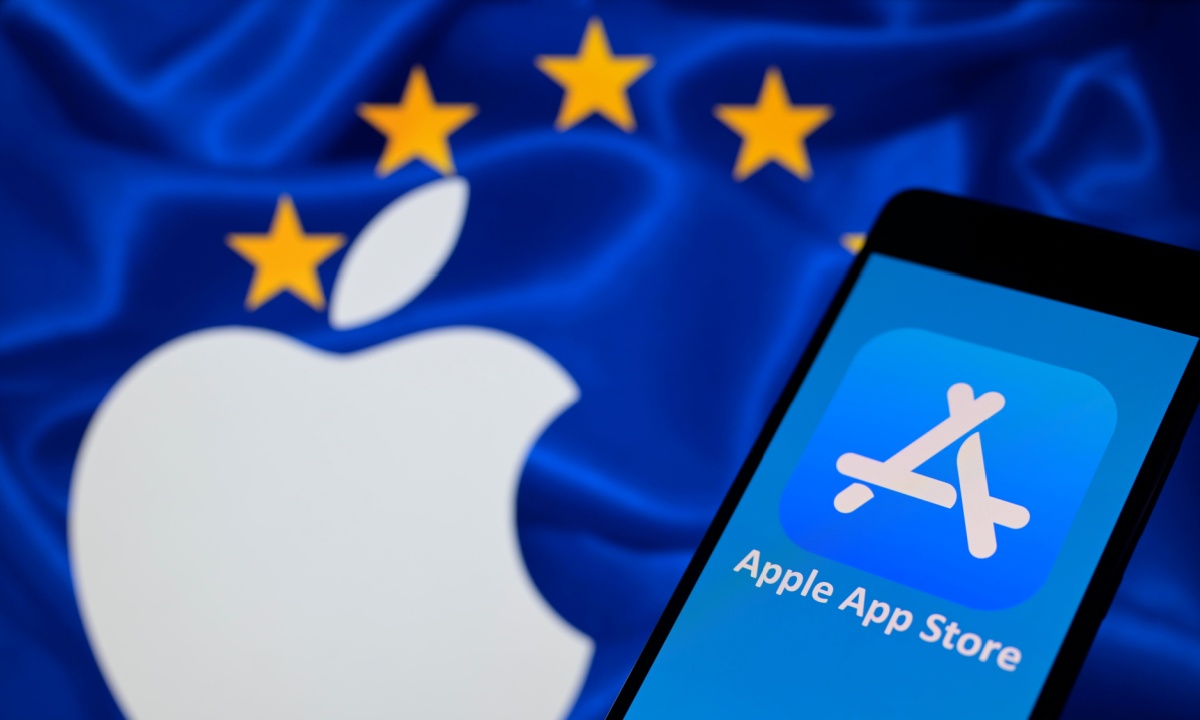
Then there’s the App Store. Apple’s $20 billion profit engine, mostly fueled by in-app purchases, now has a big blinking asterisk next to it. The Epic ruling puts this once untouchable revenue stream at risk and gives developers legitimate ways to avoid paying the Apple commission. Spotify and Netflix and Amazon already use their newfound right to steer users off-platform to sign up. Stripe has published a playbook to show developers how which suggests a giant sucking sound may follow. Apple’s grip on its ecosystem profits is slipping.
The $20 billion Apple receives from Google for default Safari search is also in jeopardy. The DOJ antitrust case could break that deal. And even if it survives, search is shifting to AI-driven chat and apps. The value of default placement will erode, taking Apple’s search revenue with it.
| Threat to Apple #4:
Lost Search Revenue
|
That’s why Apple is pinning so much hope on OpenAI. The thesis: if Siri gets smarter, users will stay loyal. The App Store keeps humming. The moat deepens. The stock price will reflect forward progress.
Users are getting impatient waiting for Siri to get smarter. And OpenAI is also busy building its own future, not Apple’s, and doing it with one of the brains behind the design of the iPhone.
The Tangled AI Web We Weave
OpenAI and Jony Ive are building a GenAI-native OS and device. It’s always on. Contextual. Commerce-ready with integration into ChatGPT with Shopify. This new experience is scheduled to launch in June of 2026.
Timeline sound familiar?
The risk to Apple isn’t theoretical. If the new OpenAI OS and connected device works as advertised, the iPhone becomes an accessory. No longer the consumer’s primary digital front door. Just another handset where real AI experiences happen independent of the handset. The iPhone becomes a commodity.
Apple is facing the same risk from Google and Android. With a global market share of roughly 74% and an already-embedded AI in the Android OS, Pixel 9 has, and Pixel 10 will ship with, Gemini. Users can speak, search, transact and navigate with native AI experience and with a phone that consumers can buy now.
Apple can’t match that today. The risk is how many consumers will keep waiting around for Apple to deliver. It’s a massive pain to switch from iOS to Android devices, and most people don’t. Getting an AI-powered Android device just may be enough for people to dump their iPhones. Especially if the Open AI/Jony Ive device is way cooler.
Consumers will, for the first time, have a plausible choice.
Apple has already seen some of that handwriting on the wall. Tim Cook warned that 2025 iPhone sales will slow, possibly falling below 2024 levels. That would mean a steady overall decline since 2021. In that year, Apple sold 242 million phones, and then saw that number slip to 232.1M in 2024.
iPhone handset sales still generate 51.4% of Apple’s revenue, so selling a lot of them matters. Fewer iPhone sales means less Services revenue and a declining user base to monetize over the long term.
This is why Apple tried to buy Perplexity.
What Apple Saw in Perplexity
Apple hoped Perplexity could become something more than a commercial deal with a GenAI-native search platform with momentum, clear user growth and a model better suited to a world of prompt-based, conversational engagement.
It was a way to get to market fast with a great product and a built-in team of otherwise scarce-as-hen’s-teeth native GenAI/agentic AI experts.
Perplexity would have been the engine for a new, native AI-powered Apple commerce experience. One Apple could own and control. The same playbook that turned iPods into a new way to access music, iPhones into access to the digital world and the NFC chip into a mobile wallet called Apple Pay.
Bolstered by the distribution from Apple’s 1.56 billion iPhones in the market.
But Apple needed Perplexity more than Perplexity needed Apple.
Perplexity denied having any M&A conversations. Whether they did or plan to, the right answer should be “thanks, but no thanks.”
Perplexity hit an $18B valuation in less than two years’ time. It’s created a native commerce capability that is the baseline for agentic commerce connected to millions of merchants through firmly. It’s working with phone operators to install its Comet browser on phones. Sure, it could flame out. But given what it touches and could disrupt, it could also become a trillion-dollar company.
It’s likely that Apple would have used the acquisition more of an insurance policy, a way to patch the hole left by a decade of underwhelming AI investments. What Apple needed, and still does, is a foundation and a clear vision for GenAI and agentic experiences.
As for Perplexity, I might recommend moving up the West Coast and alphabet to Seattle and Amazon.
Three Things Apple Can Do
Today, we find an iconic brand that’s wobbling and facing threats from all sides.
So, what are Apple’s options? Here are a few commission-free ideas.
| Idea for Apple #1:
AI Tariffs
|
AI Tariffs. Tim Cook could channel his inner President Trump and impose an AI tariff on all native AI apps, maybe even all apps with embedded AI-native experiences, in the App Store. It could be a (by current standards) small tax of something like 3-5%. Enough to make hay while the AI sun shines, but not so much that app developers would throw up, particularly in the U.S. where Apple has a 58% share of the handset market.
A Meta JV. Apple could ditch OpenAI and do a JV with Meta. It might not be as crazy as it sounds. Meta has made it clear that it will pay the big bucks to attract the best AI talent in the market. Experts with deep knowledge are scarce, and getting and keeping them means using compensation as the AI golden handcuff. Apple has lost some of its best talent to others, including Meta.
| Idea for Apple #2:
Joint Venture with Meta
|
Meta has a talent pool, and a portfolio of apps in which to embed a native, embedded AI experience. It doesn’t have a device. All of its serious AI competitors do. A JV with Apple to make Llama the AI-OS for Apple, in exchange for distribution on its handsets globally, would be complementary. And a way for Apple to potentially increase the sales of handsets globally, where its market share is a quarter of Android’s.
Buy OpenAI. Apple has the cash, and Jony Ive certainly knows his way around the halls at Cupertino. It’s possible that acquiring both an AI-OS and a device that could expand the reach of the Apple ecosystem is worth it to Apple. The partnership has given them a good look at how the two firms could work together. It would give Apple a crack at creating a commerce ecosystem, and OpenAI access to Apple’s balance sheet and management team to accelerate development.
| Idea for Apple #3:
Buy OpenAI
|
None of these moves are small. But the market is moving too quickly for Apple to buy another year with demos or promises. Chipping away at the margin and banking on brand loyalty to stick it out won’t save Apple. If it wants to stay relevant, it needs to act decisively.
The Real Lesson Apple Needs to Learn
Apple became Apple by turning technology into experiences. It didn’t just make devices, it created ecosystems. It built end-to-end worlds where hardware, software and content worked together. Companies that win in an AI-native world won’t just bolt GenAI onto existing products.
Apple seems caught flat-footed for an interface that’s invisible. Where the OS is a model. Where the user interface is a conversation. Where voice is how the conversation starts and continues. Where the agent is the user experience. And where Siri, after being the first to market with a voice-assistant, continues to disappoint nearly 15 years later.
In a space where speed to market is everything, and defines relevance, Apple is behind the curve. At the same time the rest of the GenAI and agentic pack, with an appreciable head start and momentum, are wasting no time to innovate, improve and drive usage and adoption.
Arriving late to the party is nothing new for Apple. Tim Cook once famously said that they don’t always arrive first, but they always arrive with something better. I’m not even sure that’s true. But in any case, it’s been a long time since Apple has delivered late and better.
What is true is this.
The next chapter of AI is already being written. The only question is whether, where and how Apple will be part of it.
What would you do? Share your thoughts.
Until NEXT time.



 Fintech6 months ago
 Cyber Security7 months ago
 Fintech5 months ago
 Artificial Intelligence7 months ago
 Fintech4 months ago
 Artificial Intelligence7 months ago
 Fintech7 months ago