
Hi, friends! Welcome to Installer No. 91, your guide to the best and Verge-iest stuff in the world. (If you’re new here, welcome, how is summer more than a month over already, and also you can read all the old editions at the Installer homepage.)
Artificial Intelligence
Apple beta season is here

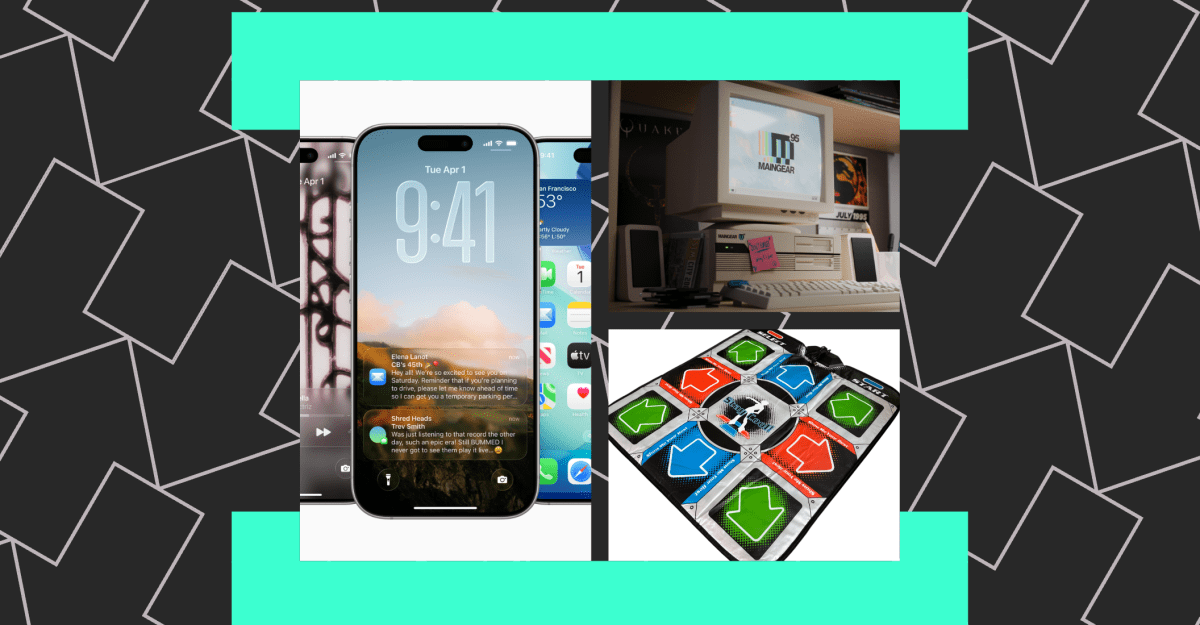
This week, I’m pondering the leaked Pixel 10 lineup, marveling at BYD’s leaping Yangwang U9 supercar, reading about why everyone’s reading Reddit, already looking forward to Ted Lasso’s fourth season, rewatching MKBHD’s videos about the Escobar folding phone, melting with joy at the new Pokémon Concierge season 2 trailer, dreaming of buying the Lego Game Boy but not actually doing so because my toddler would destroy it, and listening to Lucius’ recently released self-titled album.
I also have for you some new betas from Apple, a retro-styled PC, some thoughts about cases, and how to play Dance Dance Revolution at home today.
(As always, the best part of Installer is your ideas and tips. What do you want to know more about? What awesome tricks do you know that everyone else should? What app should everyone be using? Tell me everything: installer@theverge.com. And if you know someone else who might enjoy Installer, forward it to them and tell them to subscribe here.)
- Apple’s public betas: Public betas for iOS 26, iPadOS 26, macOS Tahoe 26, watchOS 26, and tvOS 26 are available now, giving you a chance to see Apple’s Liquid Glass design language in action before the updates are released widely this fall. I’ve been running the developer betas, and after some necessary tweaks from Apple, I’m warming up to Liquid Glass more than I expected.
- Maingear’s Retro95 PC: This limited release puts a retro shell over modern PC components. Anyone have $1,599 (or more) they can lend me?
- AppleCare One: This new $19.99-per-month subscription from Apple lets you cover up to three devices at once with the same benefits you’d get with individual AppleCare Plus subscriptions. You can add more devices for $5.99 per month each. I don’t usually pay for warranty coverage, but AppleCare One could be a good deal for a lot of people.
- The Fantastic Four: First Steps: It’s Marvel’s turn to release a superhero movie with some pretty high stakes for the company that makes it — and like DC and Superman, Marvel appears to have mostly pulled it off. As a huge Michael Giacchino fan, about half the reason I want to see this movie is for the score.
- Amazon’s Kindle Colorsoft (16GB): This new version of Amazon’s color Kindle comes with half the storage and is missing a few perks from the Kindle Colorsoft Signature Edition, but at $249.99, it’s $30 cheaper than last year’s model. I’m going to hold on to my 10th-generation Kindle Paperwhite as long as I can, but whenever it’s time to upgrade that, I’m sorely tempted by a color ereader.
- Roomba Max 705 Combo: This new combo robot vacuum from iRobot has a “first-of-its-kind roller mop cover that keeps carpets dry.” If that cover actually works, it seems like this could be a great dual-purpose robovacuum.
- Wheel World: It’s a cycling-themed open-world adventure game from Annapurna Interactive and the developers of Nidhogg. That sounds like a winning combo to me, and it might just be the feel-good game of the summer.
- Acapulco season 4: I watched the first two seasons of this Apple TV Plus series set at a resort in Mexico and loved them — the show is funny and heartwarming. Like Ted Lasso, it can be a little saccharine, but I think we should all watch some lighter TV every once in a while. Might be time for me to catch up.
Thanks to everyone who replied to my quandary about whether or not I should keep using a phone case. There were a bunch of great perspectives and feelings, so I’m sharing a few of them here in the newsletter — a lot more people go caseless than I expected!
As for my own decision? Well, I haven’t reached one yet, and honestly, I may never pick one lane. Typically, my iPhone 16 Pro lives in this slim Torras case, but as I write this, it’s sitting on top of the case, not in it. Will I put the case on before I walk out the door? We’ll see!
“I, too, felt the urge to go caseless. I’m pretty careful with my electronics, so I still didn’t love the idea of setting my phone down on tables and things alike. I got the magnetic back from Nomad, and it has felt like the perfect meet-in-the-middle accessory for me! Phone feels almost caseless, and I still get the back protection.” – Omesh
“I am totally the same with cases. I know I’ll drop it once a year and totally ruin the thing and I hate that. What I do is take the case off when I’m just chilling at my desk or couch or chair. That way I get the joy of the smooth phone, but when I am in danger of dropping it on concrete or getting out of my truck, I have the protection it needs.” – Travis
“I ran my first gen Pixel Fold without a case (while living in a beachy resort town) for two years! If the Fold can survive it, so can a 16 Pro. The Fold is still alive and well as a secondary device/backup phone. Of course, it’s definitely not pristine, so if you don’t want your phone to bear its scars, you should probably keep a case on it.” – John
“I have the Peak Design GNAR case. Saw some complaints online about the protection being too minimal for the front of the phone, but it’s been solid for me. Does well being outdoors (I run outside all the time). I’m rocking no screen protector.” – airwr3ck6669
“I never used cases until I got my current phone (Pixel 6A) because the Razer Kishi controller I used no longer fit snuggly around it, so I found a case that allowed it to fit again. I would say the case would eventually come off, but I only realized as I was reading this article that even though I no longer use that controller, I hadn’t thought to take the case off.” – xPutNameHerex
Today, I’m featuring Keith Broni, the editor-in-chief of Emojipedia. I thought of reaching out to him for this section after World Emoji Day on July 17th (the date shown on the calendar emoji), and he graciously replied. He initially got involved with the site in 2018 and took on increasing responsibilities “over the years” before taking the editor-in-chief job in 2022.
In addition to everything about his homescreen, I wanted to know what he’s looking forward to in the world of emoji. “I’m excited to see what the next unexpected emoji repurposing meme is going to be, especially as Gen Alpha becomes more and more online,” he tells me, like how Millennials repurposed the Eggplant and Peach and how Gen Z repurposed the Skull.
Emoji fascinate me — full disclosure, I submitted proposals that helped bring the Saluting Face, Bubbles, Waffle, and Yawning Face emoji into the world — so I’m to share more of the emoji universe with Installer readers.
Here’s Keith’s homescreen and his explanation of what’s on it.
The phone: Google Pixel 6. Like Molly last week, I’m an “until the wheels fall off” type of person when it comes to my personal phone, though I use an iPhone 15 Pro for work.
The wallpaper: A 2019 picture of me (I’m in all black, bar the white soles of my sneakers) wandering the grounds of the Zōjō-ji Temple in Tokyo, with the Tokyo Tower looming in the background.
- The top row is my fitness-focused stuff, as I’m preparing for a Hyrox-like competition in October, so it’s all step counts (Garmin Connect), protein goals (MyFitnessPal), habit tracking (HabitShare — a free and simple tracker with some nice friend-sharing elements for accountability), and gym class bookings (Glofox).
- Since I’m European, WhatsApp is my primary mode of texting / calling folks. And since I’m Irish, you’ve got my Irish banking app, AIB Mobile, ha.
- I’m a millennial, so Instagram is my primary mode of social media these days, though I’m also on X / Bluesky / TikTok a lot for work purposes (that end up drifting into non-work purposes if I’m not careful).
- I’m a Letterboxd user, and do enjoy attending the cinema as much as I can (shoutout to the Lighthouse in Dublin — I was there last night watching Friendship, which I thoroughly enjoyed). But really, YouTube is where I spend far too much of my time (and to a lesser extent, Nebula, which is on the next page of my home screen).
I also asked Keith to share a few things he’s into right now. Here’s what he said:
- Music-wise, I’ve been listening to a lot of Oasis on Spotify lately. I was one of the lucky 2 percent who managed to snag tickets for their current run of shows, and I’ve been riding the high ever since their homecoming gig in Manchester on Sunday (the 20th). I’ve also been enjoying several tracks from the new Wet Leg album — a band that famously workshopped their name using various emoji combos — as well as two new songs from The Last Dinner Party and Nine Inch Nails.
- To tie in with the fitness app bit above, I’ve been playing the Final Fantasy Pixel Remasters while walking on a home treadmill. I’ve been a big old-school JRPG fan since I was a kid, though I’d only played IV from this collection before.
- This Instagram account @theblack.lodge, who’s been doing limited drops of T-shirts inspired by David Lynch films (I’m a big fan, especially of Twin Peaks, RIP). I’ve bought at least one item from every drop so far.
- Book-wise, I’ve been listening to Algospeak: How Social Media Is Transforming the Future of Language by Adam Aleksic on Audible (sitting on the second page of my home screen). Before this, I finished reading the physical copy of Face with Tears of Joy: A Natural History of Emoji by Keith Houston, in which our work at Emojipedia is heavily referenced (and I’m honored to have been directly name-dropped in).
- Another bit of a self-serving one (especially since you mentioned it yourself last week), but I’ve been enjoying dipping into the revived Emojitracker.com site during spare moments to watch live emoji usage unfold.
Here’s what the Installer community is into this week. I want to know what you’re into right now as well! Email installer@theverge.com with your recommendations for anything and everything, and we’ll feature some of our favorites here every week. For even more great recommendations, check out the replies to this post on The Verge, this post on Threads, and this post on Bluesky.
“I use Outplay on my Apple Watch to track the soccer matches I play. It shows a heat map of my movement during a match and has metrics specific to playing soccer like sprints. It works better for me than using the built-in Apple Workout app or Strava.” – Harry Tequila
“Been playing the macOS version of Cyberpunk 2077 on a base M4 Mac Mini. I am impressed with the game and graphic quality of this version. Just hoping this is the start for more Mac-native versions of A & S tier games.” – penguinchiller
“I just completed the (not so) Endless Tower in Clair Obscur: Expedition 33 and beat Clea… on an MSI Claw 8 with an Intel chip! Didn’t expect that after panning the first Claw. It’s the only handheld I’ve really enjoyed this game on so far!” – Sean
“I’ve become obsessed with the Twos app and using it constantly. Highly recommend!” – Rich
“After steadfastly avoiding it because of its difficulty, I recently purchased and have been dying over and over again in Returnal. The environment really does feel like a hostile alien planet, and with headphones it feels like I can hear every drop of rain. And yeah, it’s really difficult.” – Aram
“Been playing Lushfoil Photography Sim and it is so relaxing and lovely.” – Allison
“I’ve been binging CityNerd on YouTube. The channel discusses cities, transportation, urban design, walkability, etc. Good stuff.” – low_light_mixes
Last week, I included a tidbit from a reader who has been playing Dance Dance Revolution recently. As someone who played a lot of DDR when I was a kid (“Butterfly,” anyone?), I was curious to learn more about how he does it. Here’s some of what the reader, Tom, told me — he also pointed me to a starter guide on Reddit:
“I’ll start with acknowledging I am fully not an expert in the scene, but spent a lot of time in the local arcade and at home playing on a PS2 when I was growing up.
“I grabbed the Deluxe 1-inch thick foam pad from www.ddrpad.com, along with the extension cord and the preloaded Stepmania Flash drive. Stepmania is the open-source clone of DDR. People make their own stepcharts (the arrows that scroll up during a song) and make custom songs that you can download and load in, as well as songs from the actual DDR games.
“Someone who is really into playing may want to eventually invest in a metal pad, like what’s in the arcades. They’re super sturdy and will last for years of use, whereas soft mats could potentially tear over time. There are many manufacturers out there, and the price range is usually from $400 and up for the metal pads. People even buy old arcade cabinets for thousands of dollars and have them in their home.”
Thanks, Tom! See you next week, everyone!
Follow topics and authors from this story to see more like this in your personalized homepage feed and to receive email updates.
Continue Reading

In a recent blog output, Rackspace refers to the bottlenecks familiar to many readers: messy data, unclear ownership, governance gaps, and the cost of running models once they become part of production. The company frames them through the lens of service delivery, security operations, and cloud modernisation, which tells you where it is putting its own effort.
One of the clearest examples of operational AI inside Rackspace sits in its security business. In late January, the company described RAIDER (Rackspace Advanced Intelligence, Detection and Event Research) as a custom back-end platform built for its internal cyber defense centre. With security teams working amid many alerts and logs, standard detection engineering doesn’t scale if dependent on the manual writing of security rules. Rackspace says its RAIDER system unifies threat intelligence with detection engineering workflows and uses its AI Security Engine (RAISE) and LLMs to automate detection rule creation, generating detection criteria it describes as “platform-ready” in line with known frameworks such as MITRE ATT&CK. The company claims it’s cut detection development time by more than half and reduced mean time to detect and respond. This is just the kind of internal process change that matters.
The company also positions agentic AI as a way of taking the friction out of complex engineering programmes. A January post on modernising VMware environments on AWS describes a model in which AI agents handle data-intensive analysis and many repeating tasks, yet it keeps “architectural judgement, governance and business decisions” remain in the human domain. Rackspace presents this workflow as stopping senior engineers being sidelined into migration projects. The article states the target is to keep day two operations in scope – where many migration plans fail as teams discover they have modernised infrastructure but not operating practices.
Elsewhere the company sets out a picture of AI-supported operations where monitoring becomes more predictive, routine incidents are handled by bots and automation scripts, and telemetry (plus historical data) are used to spot patterns and, it turn, recommend fixes. This is conventional AIOps language, but it Rackspace is tying such language to managed services delivery, suggesting the company uses AI to reduce the cost of labour in operational pipelines in addition to the more familiar use of AI in customer-facing environments.
In a post describing AI-enabled operations, the company stresses the importance of focus strategy, governance and operating models. It specifies the machinery it needed to industrialise AI, such as choosing infrastructure based on whether workloads involve training, fine-tuning or inference. Many tasks are relatively lightweight and can run inference locally on existing hardware.
The company’s noted four recurring barriers to AI adoption, most notably that of fragmented and inconsistent data, and it recommends investment in integration and data management so models have consistent foundations. This is not an opinion unique to Rackspace, of course, but having it writ large by a technology-first, big player is illustrative of the issues faced by many enterprise-scale AI deployments.
A company of even greater size, Microsoft, is working to coordinate autonomous agents’ work across systems. Copilot has evolved into an orchestration layer, and in Microsoft’s ecosystem, multi-step task execution and broader model choice do exist. However, it’s noteworthy that Redmond is called out by Rackspace on the fact that productivity gains only arrive when identity, data access, and oversight are firmly ensconced into operations.
Rackspace’s near-term AI plan comprises of AI-assisted security engineering, agent-supported modernisation, and AI-augmented service management. Its future plans can perhaps be discerned in a January article published on the company’s blog that concerns private cloud AI trends. In it, the author argues inference economics and governance will drive architecture decisions well into 2026. It anticipates ‘bursty’ exploration in public clouds, while moving inference tasks into private clouds on the grounds of cost stability, and compliance. That’s a roadmap for operational AI grounded in budget and audit requirements, not novelty.
For decision-makers trying to accelerate their own deployments, the useful takeaway is that Rackspace has treats AI as an operational discipline. The concrete, published examples it gives are those that reduce cycle time in repeatable work. Readers may accept the company’s direction and still be wary of the company’s claimed metrics. The steps to take inside a growing business are to discover repeating processes, examine where strict oversight is necessary because of data governance, and where inference costs might be reduced by bringing some processing in-house.
(Image source: Pixabay)
Want to learn more about AI and big data from industry leaders? Check out AI & Big Data Expo taking place in Amsterdam, California, and London. The comprehensive event is part of TechEx and co-located with other leading technology events. Click here for more information.
AI News is powered by TechForge Media. Explore other upcoming enterprise technology events and webinars here.
Artificial Intelligence
Ronnie Sheth, CEO, SENEN Group: Why now is the time for enterprise AI to ‘get practical'

Before you set sail on your AI journey, always check the state of your data – because if there is one thing likely to sink your ship, it is data quality.
Gartner estimates that poor data quality costs organisations an average of $12.9 million each year in wasted resources and lost opportunities. That’s the bad news. The good news is that organisations are increasingly understanding the importance of their data quality – and less likely to fall into this trap.
That’s the view of Ronnie Sheth, CEO of AI strategy, execution and governance firm SENEN Group. The company focuses on data and AI advisory, operationalisation and literacy, and Sheth notes she has been in the data and AI space ‘ever since [she] was a corporate baby’, so there is plenty of real-world experience behind the viewpoint. There is also plenty of success; Sheth notes that her company has a 99.99% client repeat rate.
“If I were to be very practical, the one thing I’ve noticed is companies jump into adopting AI before they’re ready,” says Sheth. Companies, she notes, will have an executive direction insisting they adopt AI, but without a blueprint or roadmap to accompany it. The result may be impressive user numbers, but with no measurable outcome to back anything up.
Even as recently as 2024, Sheth saw many organisations struggling because their data was ‘nowhere where it needed to be.’ “Not even close,” she adds. Now, the conversation has turned more practical and strategic. Companies are realising this, and coming to SENEN Group initially to get help with their data, rather than wanting to adopt AI immediately.
“When companies like that come to us, the first course of order is really fixing their data,” says Sheth. “The next course of order is getting to their AI model. They are building a strong foundation for any AI initiative that comes after that.
“Once they fix their data, they can build as many AI models as they want, and they can have as many AI solutions as they want, and they will get accurate outputs because now they have a strong foundation,” Sheth adds.
With breadth and depth in expertise, SENEN Group allows organisations to right their course. Sheth notes the example of one customer who came to them wanting a data governance initiative. Ultimately, it was the data strategy which was needed – the why and how, the outcomes of what they were trying to do with their data – before adding in governance and providing a roadmap for an operating model. “They’ve moved from raw data to descriptive analytics, moving into predictive analytics, and now we’re actually setting up an AI strategy for them,” says Sheth.
It is this attitude and requirement for practical initiatives which will be the cornerstone of Sheth’s discussion at AI & Big Data Expo Global in London this week. “Now would be the time to get practical with AI, especially enterprise AI adoption, and not think about ‘look, we’re going to innovate, we’re going to do pilots, we’re going to experiment,’” says Sheth. “Now is not the time to do that. Now is the time to get practical, to get AI to value. This is the year to do that in the enterprise.”
Watch the full video conversation with Ronnie Sheth below:

Greg Holmes, Field CTO for EMEA at Apptio, an IBM company, argues that successfully scaling intelligent automation requires financial rigour.
The “build it and they will come” model of technology adoption often leaves a hole in the budget when applied to automation. Executives frequently find that successful pilot programmes do not translate into sustainable enterprise-wide deployments because initial financial modelling ignored the realities of production scaling.
“When we integrate FinOps capabilities with automation, we’re looking at a change from being very reactive on cost management to being very proactive around value engineering,” says Holmes.
This shifts the assessment criteria for technical leaders. Rather than waiting “months or years to assess whether things are getting value,” engineering teams can track resource consumption – such as cost per transaction or API call – “straight from the beginning.”
The unit economics of scaling intelligent automation
Innovation projects face a high mortality rate. Holmes notes that around 80 percent of new innovation projects fail, often because financial opacity during the pilot phase masks future liabilities.
“If a pilot demonstrates that automating a process saves, say, 100 hours a month, leadership thinks that’s really successful,” says Holmes. “But what it fails to track is that the pilot sometimes is running on over-provisioned infrastructure, so it looks like it performs really well. But you wouldn’t over-provision to that degree during a real production rollout.”
Moving that workload to production changes the calculus. The requirements for compute, storage, and data transfer increase. “API calls can multiply, exceptions and edge cases appear at volume that might have been out of scope for the pilot phase, and then support overheads just grow as well,” he adds.
To prevent this, organisations must track the marginal cost at scale. This involves monitoring unit economics, such as the cost per customer served or cost per transaction. If the cost per customer increases as the customer base grows, the business model is flawed.
Conversely, effective scaling should see these unit costs decrease. Holmes cites a case study from Liberty Mutual where the insurer was able to find around $2.5 million of savings by bringing in consumption metrics and “not just looking at labour hours that they were saving.”
However, financial accountability cannot sit solely with the finance department. Holmes advocates for putting governance “back in the hands of the developers into their development tools and workloads.”
Integration with infrastructure-as-code tools like HashiCorp Terraform and GitHub allows organisations to enforce policies during deployment. Teams can spin up resources programmatically with immediate cost estimates.
“Rather than deploying things and then fixing them up, which gets into the whole whack-a-mole kind of problem,” Holmes explains, companies can verify they are “deploying the right things at the right time.”
When scaling intelligent automation, tension often simmers between the CFO, who focuses on return on investment, and the Head of Automation, who tracks operational metrics like hours saved.
“This translation challenge is precisely what TBM (Technology Business Management) and Apptio are designed to solve,” says Holmes. “It’s having a common language between technology and finance and with the business.”
The TBM taxonomy provides a standardised framework to reconcile these views. It maps technical resources (such as compute, storage, and labour) into IT towers and further up to business capabilities. This structure translates technical inputs into business outputs.
“I don’t necessarily know what goes into all the IT layers underneath it,” Holmes says, describing the business user’s perspective. “But because we’ve got this taxonomy, I can get a detailed bill that tells me about my service consumption and precisely which costs are driving it to be more expensive as I consume more.”
Addressing legacy debt and budgeting for the long-term
Organisations burdened by legacy ERP systems face a binary choice: automation as a patch, or as a bridge to modernisation. Holmes warns that if a company is “just trying to mask inefficient processes and not redesign them,” they are merely “building up more technical debt.”
A total cost of ownership (TCO) approach helps determine the correct strategy. The Commonwealth Bank of Australia utilised a TCO model across 2,000 different applications – of various maturity stages – to assess their full lifecycle costs. This analysis included hidden costs such as infrastructure, labour, and the engineering time required to keep automation running.
“Just because of something’s legacy doesn’t mean you have to retire it,” says Holmes. “Some of those legacy systems are worth maintaining just because the value is so good.”
In other cases, calculating the cost of the automation wrappers required to keep an old system functional reveals a different reality. “Sometimes when you add up the TCO approach, and you’re including all these automation layers around it, you suddenly realise, the real cost of keeping that old system alive is not just the old system, it’s those extra layers,” Holmes argues.
Avoiding sticker shock requires a budgeting strategy that balances variable costs with long-term commitments. While variable costs (OPEX) offer flexibility, they can fluctuate wildly based on demand and engineering efficiency.
Holmes advises that longer-term visibility enables better investment decisions. Committing to specific technologies or platforms over a multi-year horizon allows organisations to negotiate economies of scale and standardise architecture.
“Because you’ve made those longer term commitments and you’ve standardised on different platforms and things like that, it makes it easier to build the right thing out for the long term,” Holmes says.
Combining tight management of variable costs with strategic commitments supports enterprises in scaling intelligent automation without the volatility that often derails transformation.
IBM is a key sponsor of this year’s Intelligent Automation Conference Global in London on 4-5 February 2026. Greg Holmes and other experts will be sharing their insights during the event. Be sure to check out the day one panel session, Scaling Intelligent Automation Successfully: Frameworks, Risks, and Real-World Lessons, to hear more from Holmes and swing by IBM’s booth at stand #362.
See also: Klarna backs Google UCP to power AI agent payments

Want to learn more about AI and big data from industry leaders? Check out AI & Big Data Expo taking place in Amsterdam, California, and London. The comprehensive event is part of TechEx and is co-located with other leading technology events including the Cyber Security & Cloud Expo. Click here for more information.
AI News is powered by TechForge Media. Explore other upcoming enterprise technology events and webinars here.
-

 Fintech6 months ago
Race to Instant Onboarding Accelerates as FDIC OKs Pre‑filled Forms | PYMNTS.com
-

 Cyber Security7 months ago
Hackers Use GitHub Repositories to Host Amadey Malware and Data Stealers, Bypassing Filters
-
Fintech6 months ago
DAT to Acquire Convoy Platform to Expand Freight-Matching Network’s Capabilities | PYMNTS.com
-

 Fintech5 months ago
ID.me Raises $340 Million to Expand Digital Identity Solutions | PYMNTS.com
-

 Artificial Intelligence7 months ago
Nothing Phone 3 review: flagship-ish
-
 Fintech4 months ago
Tracking the Convergence of Payments and Digital Identity | PYMNTS.com
-

 Artificial Intelligence7 months ago
The best Android phones
-

 Fintech7 months ago
Intuit Adds Agentic AI to Its Enterprise Suite | PYMNTS.com