
The wait is over — kind of. Apple’s iPhone 16 series is now widely available, including the kinda affordable 16E, and its much-hyped Apple Intelligence has arrived courtesy of iOS 18.1. But if you’re expecting a new kind of iPhone experience, well, I have some bad news for you. The AI features introduced in iOS 18.1 and more recent updates, including the writing tools and ChatGPT integration, are standard fare at this point. And although Siri has a new coat of paint, it’s basically the same old Siri.
Artificial Intelligence
The best iPhones

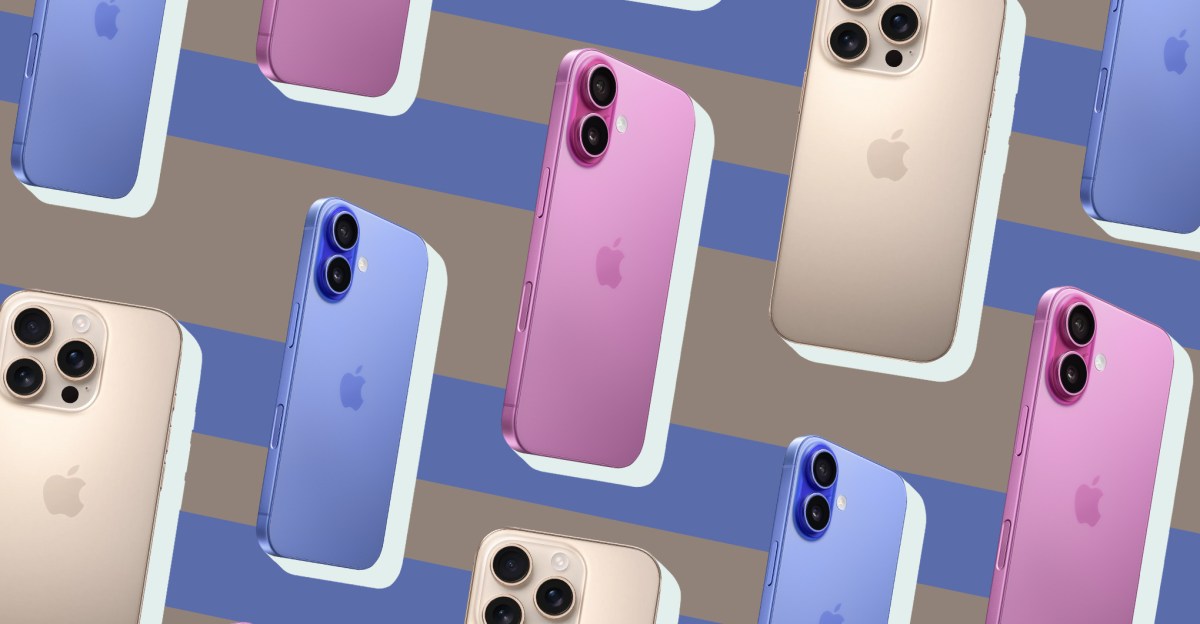
Apple has promised much more, but the Apple Intelligence rollout is going to be a slow burn that lasts well into the fall. This is all to say that if you don’t have any complaints about how your current phone is working, you definitely shouldn’t rush out and get a new one just for Apple Intelligence.
What we’re looking for
There’s no shortcut to properly testing a phone; I put my personal SIM card (physical or otherwise) in each phone I review and live with it for a minimum of one full week. I set up each phone from scratch, load it up with my apps, and go about living my life — stress testing the battery, using GPS navigation on my bike while streaming radio, taking rapid-fire portrait mode photos of my kid — everything I can throw at it. Starting over with a new phone every week either sounds like a dream or your personal hell, depending on how Into Phones you are. For me, switching has become so routine that it’s mostly painless.
The most expensive, souped-up iPhone isn’t automatically the best one for everyone. What I look for is a happy medium — features that will satisfy most people at the best price. Sometimes, that’s last year’s model.
Battery performance can vary significantly between current iPhone models, primarily due to the size of the phone. Everyone wants a phone that can last a full day, and these recommendations reflect that.
One size does not fit all. Some people like a small phone, others want the biggest screen money can buy. This list includes iPhones for people in both camps.
That’s actually the gist of our phone buying philosophy: hang on to the one you’ve got. If you’re not the type of person to get excited about a new camera button, updated photo processing options, or incremental performance upgrades, then there’s no reason to run out and buy an iPhone 16.
But if you’re questioning whether it’s the year to replace your iPhone 11 or 12 (or you’re concerned about a price increase as a result of the current tariff situation), then I think the answer is an easy yes. There are real gains this time around, especially in the basic iPhone 16 and 16 Plus, without even considering AI. And if Apple Intelligence turns out to be something special eventually, well, you’ll be ready for it.
The best iPhone for most people

Screen: 6.1-inch, 2556 x 1179 OLED, 60Hz refresh rate / Processor: A18 Cameras: 48-megapixel f/1.6 main with sensor-shift IS; 12-megapixel ultrawide; 12-megapixel selfie / Battery: Not advertised / Charging: 27W wired, 25W wireless MagSafe, 15W Qi2, 7.5W Qi / Weather-resistance rating: IP68
Apple’s basic iPhone enjoyed a significant hardware boost this time around, playing an overdue game of catch-up to the Pro series. The iPhone 16 includes the Action Button from 2023 Pro models — handy if there’s an app in your life you want to access at the touch of a button — and the new Camera Control. So if buttons are anything to go by, this phone is two better than the last-gen model.
There’s more going on under the hood, too. The A18 chipset is in the same generation as the processor on the Pro models, which hasn’t been the case for the past couple of years. That bodes well for the 16 series staying on the same update schedule. And there’s extra RAM in this year’s base model, which can only be a good thing.

The iPhone 16 became a much more interesting camera this time around, too. The Camera Control offers a quick way to launch the camera app and adjust settings like exposure compensation. But there’s also a new set of Photographic Style filters this time around, with options to adjust contrast, brightness, and undertones to dial in your preferred rendering of skin tones. You’ll get better low-light performance by stepping up to the 16 Pro models, and other cool tricks like 4K recording at 120 fps. But even without all that, it’s the most customizable camera Apple has offered yet.
Outside of camera performance, there are two major drawbacks to picking the regular 16 over a Pro model: no zoom lens, and no ProMotion screen. Only the Pro has a dedicated 5x lens, which is handy for creative framing. And the standard 60Hz screen on the iPhone 16 will likely only bother you if you’re used to a smoother 120Hz display, though it’s annoying on principle that Apple keeps this feature to its Pro phones when virtually every other high-end phone has one.
Read my full Apple iPhone 16 review.


$999
The Good
- New tone control in camera lets you dial back HDR processing
- Who doesn’t love a physical shutter button?
- Your video director friends will spend hours gleefully taking 4K120 video portraits of people at street festivals
The Bad
- Camera Control button is a little fiddly
- Default photo processing is more aggressive than ever
- The most incremental of incremental upgrades over the iPhone 15 Pro
Screen: 6.3-inch, 2622 x 1206 OLED, 120Hz refresh rate / Processor: A18 Pro Cameras: 48-megapixel f/1.8 with sensor-shift IS; 12-megapixel 5x telephoto with OIS; 48-megapixel ultrawide; 12-megapixel selfie / Battery: Not advertised / Charging: 27W wired, 25W MagSafe wireless, 15W Qi2, 7.5W Qi / Weather-resistance rating: IP68
The iPhone 16 Pro gets a small but meaningful upgrade this time around: a bump up to a 5x zoom, which on the 15 series was reserved for the Pro Max. And while the change from a 3x to 5x zoom doesn’t look that impressive on paper, it goes a long way to making the smaller 16 Pro feel like an equal to the 16 Pro Max. For once, you don’t need to get the biggest phone to get the best phone.
The 16 Pro is roughly the same size as the 15 Pro, but it has a bigger screen: 6.3 inches, up from 6.1 inches. There’s also the new Camera Control, an upgraded 48-megapixel ultrawide on board, and naturally, a new chipset that — naturally — supports Apple Intelligence.

There’s nothing here that makes the 16 Pro an absolute must-upgrade. Still, plenty of people will want the latest device with all the bells and whistles, and the 16 Pro represents an opportunity to get all of those features without having to buy the biggest phone.
Read our full Apple iPhone 16 Pro review.
The iPhone with the best battery life


$899
The Good
- Reliable camera with versatile photographic styles
- Handy new action button
- More RAM and a current-gen chipset
- Big screen for big screen fans
The Bad
- Standard refresh rate screen
- Camera control is a mixed bag
Screen: 6.7-inch Super Retina OLED / Processor: A18 Cameras: 48-megapixel f/1.6 main with sensor-shift IS; 12-megapixel ultrawide; 12-megapixel selfie / Battery: Not advertised / Charging: 27W wired, 25W wireless MagSafe, 15W Qi2, 7.5W Qi / Weather-resistance rating: IP68
The thing about a big phone is that it has a big battery. And while that’s easy enough to understand, it still feels surprising how much more performance you can eke out of the iPhone 16 Plus’ battery. It’ll stretch well into a second day of use, and even if you’re conditioned to charge your phone every night, you’ll be amazed at how much you have left in the tank at the end of each day. It’s a solid antidote to battery anxiety.

Naturally, the 16 Plus’ big-ness comes with another bonus: a bigger screen. The benefits are obvious here, too. But something that stands out to me when I use the phone is just how light it feels for its size, especially if you’re comparing it to the 16 Pro Max. If you like a big display but don’t need all of the weight of the Max — metaphorically and physically speaking — then the Plus is the way to go.
Read our full Apple iPhone 16 Plus review.
The best inexpensive-ish iPhone


$599
The Good
- Reliable performance
- Good, if limited, camera system
- It’s the cheapest new iPhone you can buy
The Bad
- No MagSafe
- $599 feels like $100 too much
- No ultrawide
Screen: 6.1-inch Super Retina XDR / Processor: A18 Cameras: 48MP Fusion with 1x and 2x optical zoom, 12-megapixel selfie / Battery: Not advertised / Charging: 20-watt wired, 7.5W Qi, no MagSafe/ Weather-resistance rating: IP68
This recommendation comes with a heavy sigh. Yes, the 16E is the cheapest new iPhone Apple sells. Yes, it’s a good phone. It has a capable camera, reliable performance, full water resistance, wireless charging, and will be supported with software updates for years to come. But its $599 price tag starts to feel like too much when you consider what it’s missing.
There’s no MagSafe, which you can kind of add by way of a MagSafe case, but it’s a bummer not to have it built in when it has basically become a standard iPhone feature. There’s no ultrawide camera, no Dynamic Island housing timely information, no camera control (not a huge loss, honestly), and no Ultra Wideband for precise object tracking. It does support Apple Intelligence, but that doesn’t feel like much of a consolation, given that it’s very much still a work in progress.
The 16E will most likely receive more years of software support than a previous-gen model like the iPhone 14 or 15. And sure, Apple Intelligence might turn into something useful someday. The 16E is a good choice if you want the path of least resistance to blue bubbles and FaceTime at your fingertips. But if you’d like MagSafe, a more advanced camera, and some of the other bells and whistles that got lost on the way to the 16E, then it’s not a bad idea to look at one of the older iPhones.
Read my full Apple iPhone 16E review.
What about the iPhone 15?
Apple still sells the iPhone 15 new, cutting the price down to $699 with the introduction of the 16 series. There’s a strong argument for buying a 15 rather than the 16E if you don’t care about Apple Intelligence; the 15 Pro runs Apple Intelligence while the regular 15 doesn’t. Compared to the 16E, the iPhone 15 includes MagSafe, the Dynamic Island, an ultra wideband chip for precise item tracking, and an ultrawide camera.
Update, July 25th: Updated to reflect current pricing / availability, with new links for relevancy.
Follow topics and authors from this story to see more like this in your personalized homepage feed and to receive email updates.
Continue Reading

Among the big players in technology, Cisco is one of the sector’s leaders that’s advancing operational deployments of AI internally to its own operations, and the tools it sells to its customers around the world. As a large company, its activities encompass many areas of the typical IT stack, including infrastructure, services, security, and the design of entire enterprise-scale networks.
Cisco’s internal teams use a blend of machine learning and agentic AI to help them improve their own service delivery and personalise user experiences for its customers. It’s built a shared AI fabric built on patterns of compute and networking that are the product of years spent checking and validating its systems – battle-hardened solutions it then has the confidence to offer to customers. The infrastructure in play relies on high-performance GPUs, of course, but it’s not just raw horse-power. The detail is in the careful integration between compute and network stacks used in model training and the quite different demands from the ongoing load of inference.
Having made its name as the de facto supplier of networking infrastructure for the enterprise, it comes as no shock that it’s in network automation that some of its better-known uses of AI finds their place. Automated configuration workflows and identity management combine into access solutions that are focused on rapid network deployments generated by natural language.
For organisations looking to develop into the next generation of AI users, Cisco has been rolling out hardware and orchestration tools that are aimed explicitly to support AI workloads. A recent collaboration with chip giant NVIDIA led to the emergence of a new line of switches and the Nexus Hyperfabric line of AI network controllers. These aim to simplify the deployment of the complex clusters needed for top-end, high-performance artificial intelligence clusters.
Cisco’s Secure AI Factory framework with partners like NVIDIA and Run:ai is aimed at production-grade AI pipelines. It uses distributed orchestration, GPU utilisation governance, Kubernetes microservice optimisation, and storage, under the umbrella product description Intersight. For more local deployments, Cisco Unified Edge brings all the necessary elements – compute, networking, security, and storage – close to where data gets generated and processed.
In environments where latency metrics are critically important, AI processing at the edge is the answer. But Cisco’s approach is not necessarily to offer dedicated IIoT-specific solutions. Instead, it tries to extend the operational models typically found in a data centre and applies the same technology (if not the same exact methodology) to edge sites. It’s like data centre-grade security policies and configurations available to remote installations. Having the same precepts and standards in cloud and edge mean that Cisco accredited engineers can manage and maintain data centres or small edge deployments using the same skills, accreditation, knowledge, and experience.
Security and risk management figure prominently in the Cisco AI narrative. Its Integrated AI Security and Safety Framework applies high standards of safety and security throughout the life-cycle of AI systems. It considers adversarial threats, supply chain weakness, the risk profiles of multi-agent interactions, and multi-modal vulnerabilities as issues that have to be addressed regardless of the nature or size of any deployment.
Cisco’s work on operational AI also reflects broader ecosystem conversations. The company markets products for organisations wanting to make the transition from generative to agentic AI, where autonomous software agents carry out operational tasks. In most cases, this requires new tooling and new operational protocols.
Cisco’s future AI plans include continuing its central work in infrastructure provision for AI workloads. It’s also pursuing broader adoption of AI-ready networks, including next-gen wireless and unified management systems that will control systems across campus, branch, and cloud environments. The company is also expanding its software and platform investments, including its most recent acquisition (NeuralFabric), to help it build a more comprehensive software stack and product portfolio.
In summary, Cisco’s AI deployment strategy combines hardware, software, and service elements that embed AI into operations, giving organisations a route to production-grade systems. Its work can be found in large-scale infrastructure, systems for unified management, risk mitigation, and anywhere that connects distributed, cloud, and edge computing.
(Image source: Pixabay)
Want to learn more about AI and big data from industry leaders? Check out AI & Big Data Expo taking place in Amsterdam, California, and London. The comprehensive event is part of TechEx and co-located with other leading technology events. Click here for more information.
AI News is powered by TechForge Media. Explore other upcoming enterprise technology events and webinars here.

In a recent blog output, Rackspace refers to the bottlenecks familiar to many readers: messy data, unclear ownership, governance gaps, and the cost of running models once they become part of production. The company frames them through the lens of service delivery, security operations, and cloud modernisation, which tells you where it is putting its own effort.
One of the clearest examples of operational AI inside Rackspace sits in its security business. In late January, the company described RAIDER (Rackspace Advanced Intelligence, Detection and Event Research) as a custom back-end platform built for its internal cyber defense centre. With security teams working amid many alerts and logs, standard detection engineering doesn’t scale if dependent on the manual writing of security rules. Rackspace says its RAIDER system unifies threat intelligence with detection engineering workflows and uses its AI Security Engine (RAISE) and LLMs to automate detection rule creation, generating detection criteria it describes as “platform-ready” in line with known frameworks such as MITRE ATT&CK. The company claims it’s cut detection development time by more than half and reduced mean time to detect and respond. This is just the kind of internal process change that matters.
The company also positions agentic AI as a way of taking the friction out of complex engineering programmes. A January post on modernising VMware environments on AWS describes a model in which AI agents handle data-intensive analysis and many repeating tasks, yet it keeps “architectural judgement, governance and business decisions” remain in the human domain. Rackspace presents this workflow as stopping senior engineers being sidelined into migration projects. The article states the target is to keep day two operations in scope – where many migration plans fail as teams discover they have modernised infrastructure but not operating practices.
Elsewhere the company sets out a picture of AI-supported operations where monitoring becomes more predictive, routine incidents are handled by bots and automation scripts, and telemetry (plus historical data) are used to spot patterns and, it turn, recommend fixes. This is conventional AIOps language, but it Rackspace is tying such language to managed services delivery, suggesting the company uses AI to reduce the cost of labour in operational pipelines in addition to the more familiar use of AI in customer-facing environments.
In a post describing AI-enabled operations, the company stresses the importance of focus strategy, governance and operating models. It specifies the machinery it needed to industrialise AI, such as choosing infrastructure based on whether workloads involve training, fine-tuning or inference. Many tasks are relatively lightweight and can run inference locally on existing hardware.
The company’s noted four recurring barriers to AI adoption, most notably that of fragmented and inconsistent data, and it recommends investment in integration and data management so models have consistent foundations. This is not an opinion unique to Rackspace, of course, but having it writ large by a technology-first, big player is illustrative of the issues faced by many enterprise-scale AI deployments.
A company of even greater size, Microsoft, is working to coordinate autonomous agents’ work across systems. Copilot has evolved into an orchestration layer, and in Microsoft’s ecosystem, multi-step task execution and broader model choice do exist. However, it’s noteworthy that Redmond is called out by Rackspace on the fact that productivity gains only arrive when identity, data access, and oversight are firmly ensconced into operations.
Rackspace’s near-term AI plan comprises of AI-assisted security engineering, agent-supported modernisation, and AI-augmented service management. Its future plans can perhaps be discerned in a January article published on the company’s blog that concerns private cloud AI trends. In it, the author argues inference economics and governance will drive architecture decisions well into 2026. It anticipates ‘bursty’ exploration in public clouds, while moving inference tasks into private clouds on the grounds of cost stability, and compliance. That’s a roadmap for operational AI grounded in budget and audit requirements, not novelty.
For decision-makers trying to accelerate their own deployments, the useful takeaway is that Rackspace has treats AI as an operational discipline. The concrete, published examples it gives are those that reduce cycle time in repeatable work. Readers may accept the company’s direction and still be wary of the company’s claimed metrics. The steps to take inside a growing business are to discover repeating processes, examine where strict oversight is necessary because of data governance, and where inference costs might be reduced by bringing some processing in-house.
(Image source: Pixabay)
Want to learn more about AI and big data from industry leaders? Check out AI & Big Data Expo taking place in Amsterdam, California, and London. The comprehensive event is part of TechEx and co-located with other leading technology events. Click here for more information.
AI News is powered by TechForge Media. Explore other upcoming enterprise technology events and webinars here.
Artificial Intelligence
Ronnie Sheth, CEO, SENEN Group: Why now is the time for enterprise AI to ‘get practical'

Before you set sail on your AI journey, always check the state of your data – because if there is one thing likely to sink your ship, it is data quality.
Gartner estimates that poor data quality costs organisations an average of $12.9 million each year in wasted resources and lost opportunities. That’s the bad news. The good news is that organisations are increasingly understanding the importance of their data quality – and less likely to fall into this trap.
That’s the view of Ronnie Sheth, CEO of AI strategy, execution and governance firm SENEN Group. The company focuses on data and AI advisory, operationalisation and literacy, and Sheth notes she has been in the data and AI space ‘ever since [she] was a corporate baby’, so there is plenty of real-world experience behind the viewpoint. There is also plenty of success; Sheth notes that her company has a 99.99% client repeat rate.
“If I were to be very practical, the one thing I’ve noticed is companies jump into adopting AI before they’re ready,” says Sheth. Companies, she notes, will have an executive direction insisting they adopt AI, but without a blueprint or roadmap to accompany it. The result may be impressive user numbers, but with no measurable outcome to back anything up.
Even as recently as 2024, Sheth saw many organisations struggling because their data was ‘nowhere where it needed to be.’ “Not even close,” she adds. Now, the conversation has turned more practical and strategic. Companies are realising this, and coming to SENEN Group initially to get help with their data, rather than wanting to adopt AI immediately.
“When companies like that come to us, the first course of order is really fixing their data,” says Sheth. “The next course of order is getting to their AI model. They are building a strong foundation for any AI initiative that comes after that.
“Once they fix their data, they can build as many AI models as they want, and they can have as many AI solutions as they want, and they will get accurate outputs because now they have a strong foundation,” Sheth adds.
With breadth and depth in expertise, SENEN Group allows organisations to right their course. Sheth notes the example of one customer who came to them wanting a data governance initiative. Ultimately, it was the data strategy which was needed – the why and how, the outcomes of what they were trying to do with their data – before adding in governance and providing a roadmap for an operating model. “They’ve moved from raw data to descriptive analytics, moving into predictive analytics, and now we’re actually setting up an AI strategy for them,” says Sheth.
It is this attitude and requirement for practical initiatives which will be the cornerstone of Sheth’s discussion at AI & Big Data Expo Global in London this week. “Now would be the time to get practical with AI, especially enterprise AI adoption, and not think about ‘look, we’re going to innovate, we’re going to do pilots, we’re going to experiment,’” says Sheth. “Now is not the time to do that. Now is the time to get practical, to get AI to value. This is the year to do that in the enterprise.”
Watch the full video conversation with Ronnie Sheth below:
-

 Fintech6 months ago
Race to Instant Onboarding Accelerates as FDIC OKs Pre‑filled Forms | PYMNTS.com
-

 Cyber Security7 months ago
Hackers Use GitHub Repositories to Host Amadey Malware and Data Stealers, Bypassing Filters
-
Fintech6 months ago
DAT to Acquire Convoy Platform to Expand Freight-Matching Network’s Capabilities | PYMNTS.com
-

 Fintech5 months ago
ID.me Raises $340 Million to Expand Digital Identity Solutions | PYMNTS.com
-

 Artificial Intelligence7 months ago
Nothing Phone 3 review: flagship-ish
-
 Fintech4 months ago
Tracking the Convergence of Payments and Digital Identity | PYMNTS.com
-

 Artificial Intelligence7 months ago
The best Android phones
-

 Fintech7 months ago
Intuit Adds Agentic AI to Its Enterprise Suite | PYMNTS.com