
Let’s get this out of the way: The Samsung Frame is not a good TV. None of the displays that I’d classify as art TVs are — at least not in the ways that we usually think about TVs. They only get a fraction as bright as comparably priced TVs, picture quality is middling, black level performance is bad (even for an LCD TV), and color accuracy out of the box leaves a lot to be desired. But that’s not why people buy art TVs.
Artificial Intelligence
If you must get an art TV, get The Frame

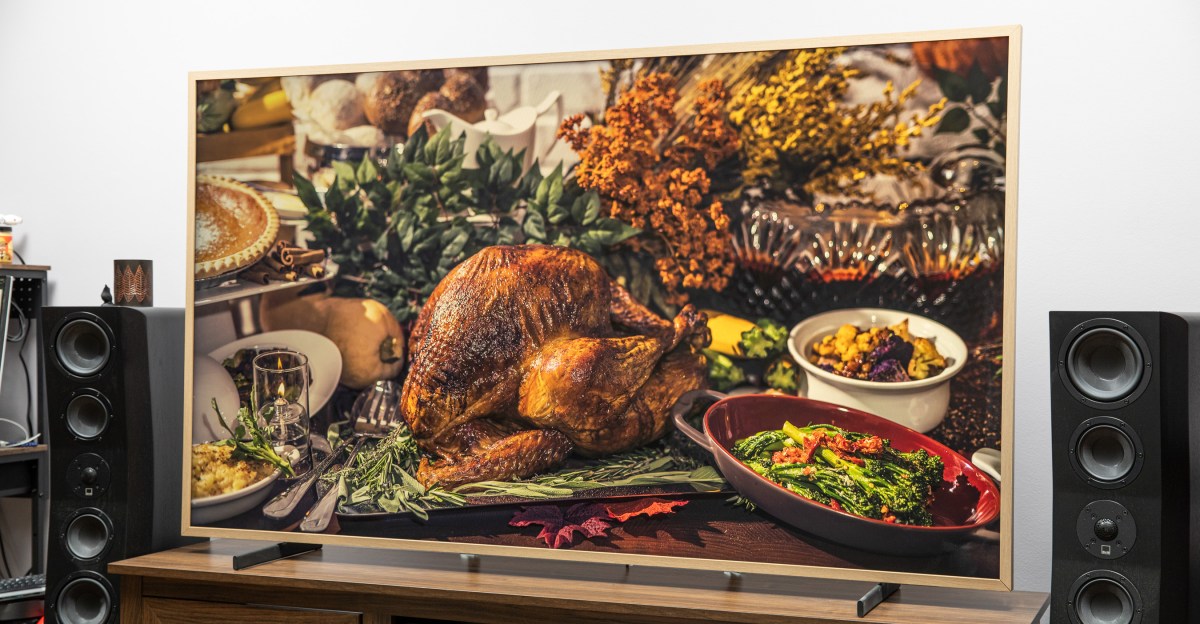
Close friends of mine love The Frame on their living room wall and have asked me about Black Friday sales so they can buy another for the bedroom, even after I gave them a list of cheaper TVs that are better at being actual TVs. I get it, though. Even when it’s off, a 65-inch (or larger) TV is a dominating presence in any room, a black hole of wasted potential. But have it display a classic work of art, and now the room has a focal point. A conversation piece. Something classy. Many TVs and streaming boxes have screensaver modes that cycle through artworks and photos. Still, because of its glossy, reflective screen and obvious TV bezel, a regular TV displaying art looks like a regular TV. An art TV looks like art.
Samsung invented the art TV category in 2017 with The Frame, which, until recently, was the only option available. Now there are four, and I called in all of them: a 65-inch Samsung The Frame ($1,799.99) and 75-inch The Frame Pro ($3,199.99); a 55-inch Hisense CanvasTV ($999.99); and a 55-inch TCL Nxtvision ($1,299.99, originally released as the Nxtframe). All are edge-lit, matte-screen TVs specifically made to live most of their lives as framed pieces of art. I set them up in my living room, one after the other, to see which are the best at being art TVs, which are the best at being regular ones, and if you can spend less than the cost of The Frame and still be satisfied.


$1598
The Frame Pro delivers more brightness than any other art TV, but it isn’t quite worth the premium price.


$898
The Hisense CanvasTV is a good way to get an art TV in your home for a little bit less than The Frame.


$798
The TCL Nxtvision comes with a frame bezel and looks okay, but doesn’t measure up to the other art TVs.
Art TVs versus regular TVs
Unlike a full LED backlight layer behind the LCD layer of a standard TV, an edge-lit TV’s LEDs are, as the name suggests, around the perimeter. This allows it to have a slimmer, uniform profile that can be mounted close to the wall and looks more like a picture frame than a TV frame. Edge-lit TVs are also generally more energy efficient, since they have fewer LEDs to power.
Regular TVs with glossy finishes show reflections. A lamp can cause rainbow reflections across the screen or a streak of light that can easily distract from the image. The matte finish on art TVs, though, mitigates reflective issues and makes lamplight less obtrusive, almost blending into the image. It also adds to the illusion of the TV being a textured canvas rather than a flat piece of glass with light behind it.
All of the art TVs are designed to be mounted flush against the wall, and for a streamlined look, should have any power or connection cables run through the wall.
They all include wall mounts and use the same mounting method: two TV brackets with hinges slide into two wall-mounted brackets with hooks. Strong magnets in the TV mounts hold the TVs tightly against the wall mounts. With the included paper templates, you should be able to find adequate locations to attach each wall mount to a stud, although YouTuber Snazzy Labs ran into issues with the installation in his 130-year-old house.
Since I’m a renter, I couldn’t mount any of the TVs on my wall, instead using the included feet for all the TVs except the TCL, which doesn’t come with any.

The power cable could present another major installation issue. A visible cable descending from the TV does not help it look like a picture frame. If you plan to connect any sources to the Hisense and TCL, you’ll have to deal with hiding HDMI cables as well. Ideally, you’d route the cables behind the wall using something like a PowerBridge, but again: renter.
The Frame and The Frame Pro use external boxes for all their source connections. The Frame’s box uses a thin, translucent cable that carries signal information and power to the TV. The cable is smaller than a power cable or an HDMI cable, but it’s still a cable and will need to be hidden in some way. The Frame Pro uses a wireless Connect Box, which initially sounds like an excellent solution. But without the thin cable connection used by the wired One Connect Box supplying power, The Frame Pro instead uses a regular power cable, which is thicker than the One Connect Box cable and even harder to hide. The box needs to be placed within 10 meters of the TV and away from metal furniture for a secure connection. I didn’t encounter connectivity issues, but some users have reported issues online.
The Frame Pro isn’t a good choice for gamers. The latency introduced by the wireless connection is too high for anything but the most casual gaming. There’s a Micro HDMI port on the back of The Frame Pro, which significantly reduces input lag, enabling any type of gaming. But that’s yet another cable that needs to be run (and hidden) on a TV that’s intended to be wireless.
Winner: Samsung The Frame
Losers: Samsung The Frame Pro, Hisense CanvasTV, TCL Nxtvision
All of the art TVs also have magnetic bezels that look like picture frames, to add to the artwork look. The Hisense and TCL each have a bezel set included, while the bezels for the Samsung models are an additional purchase (this is a running theme). Installation of the mock frames is easy (although the TCL took a bit more finagling to match the corners), and they look stylish and clean, like an actual picture frame.
The bezels are a necessary addition, but beyond a cursory glance, I don’t think anyone would seriously be fooled into thinking any of these art TVs are framed canvases, or even art prints, hanging on the wall. Deco TV Frames has a bunch of additional bezel options (including some ridiculous 22-karat ones that cost more than the TV), and sellers on Etsy have even more variety.
I appreciate the option to customize the look, but it’s ridiculous that a TV designed and marketed to look like a frame on the wall doesn’t include at least one bezel.
Winners: Hisense CanvasTV, TCL Nxtvision
Losers: Samsung The Frame, Samsung The Frame Pro
When it comes to displaying art, Samsung’s The Frame and The Frame Pro look most realistic. Their matte finish does the best job with direct reflections. But for The Frame Pro, there’s a huge caveat. It’s brighter than the non-Pro version, which makes art look engaging in a bright room and will give it some minor bonuses when we get to movie and TV content. But as the sun goes down or the lights go out, the art looks too bright, completely ruining the illusion. Even the ambient light sensor in The Frame Pro doesn’t get the TV dim enough in low-light situations. Because the other TVs are dimmer, this isn’t as much of a problem. All of the TVs can also be set on a timer to turn off overnight, but for those hours when it’s darker, and you’re still awake, The Frame Pro is quite obviously a TV on the wall.


Both Samsung models come with a small selection of free art, but for access to over 3,000 artworks, you’ll need to subscribe to the Samsung Art Store for $50 per year. It’s possible to find pictures of the art yourself, properly size them, and load them onto a USB stick, but you’ll miss out on curated collections of the most famous pieces on display around the world. To get the most out of The Frame, you need to spend additional money for a bezel and Art Store subscription.
The Hisense CanvasTV also does an admirable job displaying art, especially considering it’s hundreds of dollars less than The Frame. There are also over 1,000 pieces of art loaded on the TV for free, including notable pieces from major artists, such as Vincent van Gogh’s Irises and Claude Monet’s The Japanese Footbridge. The art is as detailed as what’s available from Samsung.
With the TCL Nxtvision, though, I found the quality of the art images to be inconsistent. Some looked great and detailed, but others were slightly out of focus on parts of the screen, or the lighting used when the photo of the art was taken didn’t evenly illuminate the art.
Winners: Samsung The Frame, Hisense CanvasTV
Losers: Samsung The Frame Pro, TCL Nxtvision
The art TV as an actual TV
The things that make art TVs great at art come at the expense of picture quality when they’re used as TVs. Because of the edge lighting, none of the TVs can achieve fine control of the backlight over small areas of the screen. The Frame, Hisense, and TCL TVs don’t have local dimming controls, so any bright areas onscreen cause dark areas to be raised. The Frame Pro is slightly better than the other displays because it uses mini LEDs, but it’s still edge-lit, so it only offers limited local dimming.
All four TVs have some level of glow from the sides and corners of the screen where the lighting is located. It’s blatantly apparent with black bars while watching movies, which are more like gray bars. On all the displays, the black uniformity — how consistent black looks across the entire screen — is mediocre. It’s noticeable in images with large areas of black, such as space scenes in Gravity or when K explores the orphanage’s furnaces in Blade Runner 2049.
The matte coating contributes to the raised black levels as well, especially when there’s ambient light, because of the way it diffuses the light across the screen. This is most notable on the Hisense CanvasTV, but all of the screens suffer raised black levels from ambient light. If you’re watching sports or something that’s primarily bright, you won’t notice it as much. But dark movies and TV shows lose most of their shadow detail with room lights on.

The combination of edge lighting and the matte finish also affects maximum overall brightness. The Frame Pro is the brightest of the bunch, able to surpass 1,000 nits (and up to 800 nits in its far more color-accurate Filmmaker Mode). It’s a good amount of brightness, although it still doesn’t deliver the nice pop of specular highlights you can get from every other comparably priced TV. And, as mentioned earlier, its brightness can be a detriment to the reality of the art when it’s in Art Mode.
The other TVs are dimmer, with The Frame at 661 nits, the Hisense CanvasTV measuring 527 nits, and the TCL Nxtvision being the dimmest of them all at 441 nits. The TVs were all in their most accurate Filmmaker or Movie modes. That level of brightness is fine for a darker room, but it doesn’t deliver an engaging image. And in a darker room, the black level issues are also more apparent.
Color accuracy follows the same trend as brightness. With Filmmaker Mode, The Frame Pro looks most accurate. Colors, particularly skin tones, look suitably realistic. The Frame colors are more muted, and there are visible issues with the Hisense and TCL TVs in blues, yellows, oranges, and browns. If you use the default modes — Eco on the Samsung, Energy Saving on the Hisense, and Low Power on the TCL — the picture is very blue. As with all TVs it’s important to switch from the default picture modes to get the most accurate image.
Winner: Samsung The Frame Pro
Losers: Samsung The Frame, Hisense CanvasTV, TCL Nxtvision
Both the Hisense and TCL TVs use Google OS, which is my favorite built-in streaming OS. It’s easy to navigate the homescreen and the menus, and it responds quickly to button presses. Samsung’s Tizen OS, on the other hand, is frustrating to get around and has annoying default settings that I recommend turning off, such as Autorun Samsung TV Plus (which is buried in the Advanced Features submenu and disables the free TV service from running when the TV turns on).
The Hisense and TCL also have good gaming support, with variable refresh rate up to 144Hz and both FreeSync and G-Sync compatibility. The Frame (on sizes 55 inches and above) supports gaming up to 120Hz. And since The Frame’s One Connect Box is still tethered to the TV, it doesn’t have the wireless lag issues of The Frame Pro.
Winners: Hisense CanvasTV, TCL Nxtvision
Losers: Samsung The Frame, Samsung The Frame Pro


The Frame TV and its competitors are exercises in compromise. They’re all successful to some degree, displaying artwork and pretending they aren’t TVs. But because of that, they don’t perform all that well when they are trying to be TVs.
And as much as I hate to admit it, for most people, that middling TV performance doesn’t really matter. What matters more for art TVs is how easily they can be forgotten and fit the decor of the room. If they can also play the football game on the weekend or an occasional movie with the kids before bed, then that’s even better.
If that’s your priority, there are really only two choices you should consider: Samsung’s The Frame or the Hisense CanvasTV. The TCL falls behind its competitors’ performance as an art TV and a regular TV. And while the more expensive Frame Pro is brighter and better as a TV, its wireless connection box is more of a lateral move, solving no real problems and adding latency and a thicker power cable. Better to stick with the original. And even though The Frame is better for art and for movies and TV, if you don’t want the price tag of a Samsung, or the hidden extra costs of Samsung’s bezels and Art Store, the Hisense CanvasTV gets the job done for less.
Photography by John Higgins / The Verge
Follow topics and authors from this story to see more like this in your personalized homepage feed and to receive email updates.
Continue Reading

In a recent blog output, Rackspace refers to the bottlenecks familiar to many readers: messy data, unclear ownership, governance gaps, and the cost of running models once they become part of production. The company frames them through the lens of service delivery, security operations, and cloud modernisation, which tells you where it is putting its own effort.
One of the clearest examples of operational AI inside Rackspace sits in its security business. In late January, the company described RAIDER (Rackspace Advanced Intelligence, Detection and Event Research) as a custom back-end platform built for its internal cyber defense centre. With security teams working amid many alerts and logs, standard detection engineering doesn’t scale if dependent on the manual writing of security rules. Rackspace says its RAIDER system unifies threat intelligence with detection engineering workflows and uses its AI Security Engine (RAISE) and LLMs to automate detection rule creation, generating detection criteria it describes as “platform-ready” in line with known frameworks such as MITRE ATT&CK. The company claims it’s cut detection development time by more than half and reduced mean time to detect and respond. This is just the kind of internal process change that matters.
The company also positions agentic AI as a way of taking the friction out of complex engineering programmes. A January post on modernising VMware environments on AWS describes a model in which AI agents handle data-intensive analysis and many repeating tasks, yet it keeps “architectural judgement, governance and business decisions” remain in the human domain. Rackspace presents this workflow as stopping senior engineers being sidelined into migration projects. The article states the target is to keep day two operations in scope – where many migration plans fail as teams discover they have modernised infrastructure but not operating practices.
Elsewhere the company sets out a picture of AI-supported operations where monitoring becomes more predictive, routine incidents are handled by bots and automation scripts, and telemetry (plus historical data) are used to spot patterns and, it turn, recommend fixes. This is conventional AIOps language, but it Rackspace is tying such language to managed services delivery, suggesting the company uses AI to reduce the cost of labour in operational pipelines in addition to the more familiar use of AI in customer-facing environments.
In a post describing AI-enabled operations, the company stresses the importance of focus strategy, governance and operating models. It specifies the machinery it needed to industrialise AI, such as choosing infrastructure based on whether workloads involve training, fine-tuning or inference. Many tasks are relatively lightweight and can run inference locally on existing hardware.
The company’s noted four recurring barriers to AI adoption, most notably that of fragmented and inconsistent data, and it recommends investment in integration and data management so models have consistent foundations. This is not an opinion unique to Rackspace, of course, but having it writ large by a technology-first, big player is illustrative of the issues faced by many enterprise-scale AI deployments.
A company of even greater size, Microsoft, is working to coordinate autonomous agents’ work across systems. Copilot has evolved into an orchestration layer, and in Microsoft’s ecosystem, multi-step task execution and broader model choice do exist. However, it’s noteworthy that Redmond is called out by Rackspace on the fact that productivity gains only arrive when identity, data access, and oversight are firmly ensconced into operations.
Rackspace’s near-term AI plan comprises of AI-assisted security engineering, agent-supported modernisation, and AI-augmented service management. Its future plans can perhaps be discerned in a January article published on the company’s blog that concerns private cloud AI trends. In it, the author argues inference economics and governance will drive architecture decisions well into 2026. It anticipates ‘bursty’ exploration in public clouds, while moving inference tasks into private clouds on the grounds of cost stability, and compliance. That’s a roadmap for operational AI grounded in budget and audit requirements, not novelty.
For decision-makers trying to accelerate their own deployments, the useful takeaway is that Rackspace has treats AI as an operational discipline. The concrete, published examples it gives are those that reduce cycle time in repeatable work. Readers may accept the company’s direction and still be wary of the company’s claimed metrics. The steps to take inside a growing business are to discover repeating processes, examine where strict oversight is necessary because of data governance, and where inference costs might be reduced by bringing some processing in-house.
(Image source: Pixabay)
Want to learn more about AI and big data from industry leaders? Check out AI & Big Data Expo taking place in Amsterdam, California, and London. The comprehensive event is part of TechEx and co-located with other leading technology events. Click here for more information.
AI News is powered by TechForge Media. Explore other upcoming enterprise technology events and webinars here.
Artificial Intelligence
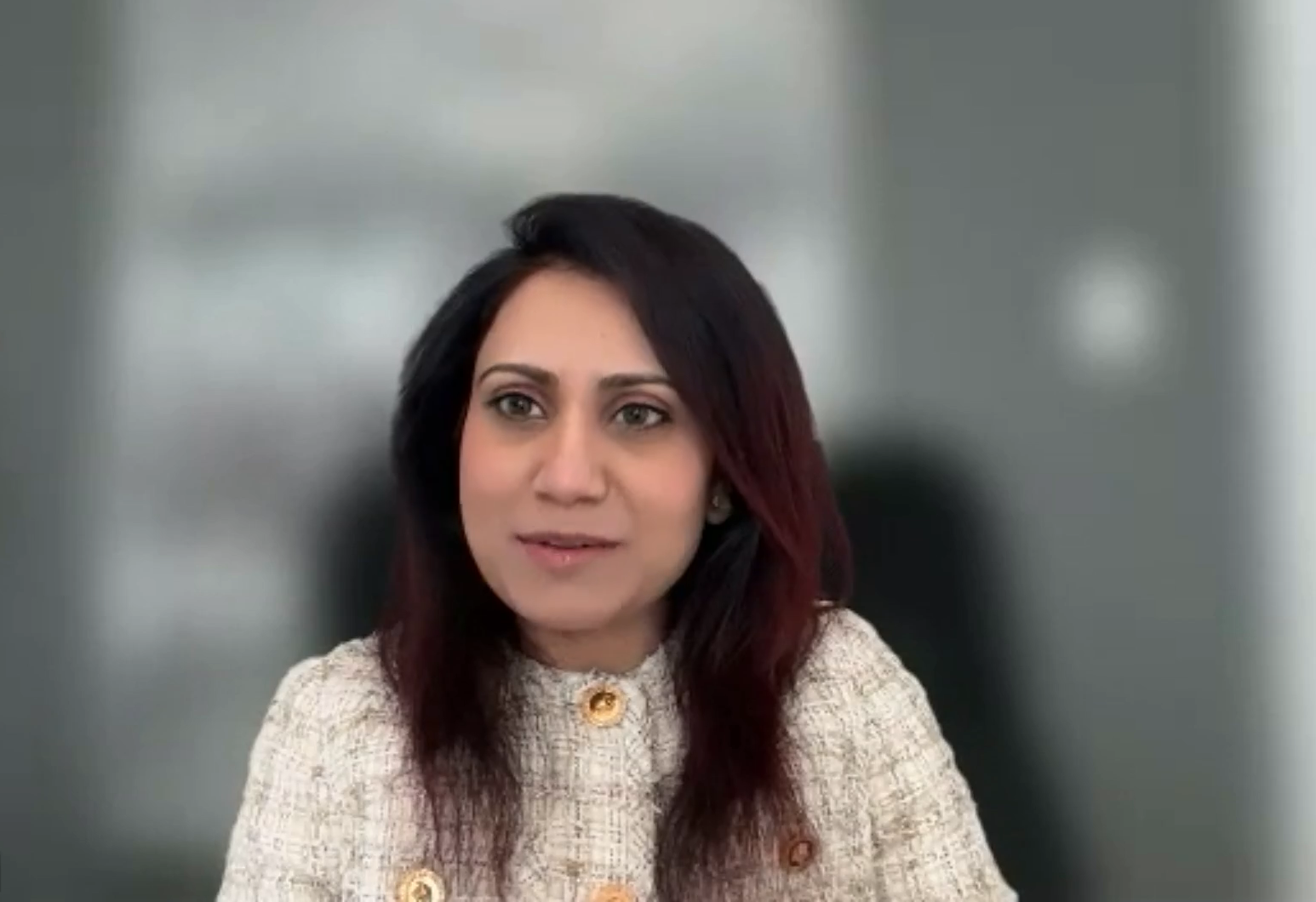
Ronnie Sheth, CEO, SENEN Group: Why now is the time for enterprise AI to ‘get practical'
Before you set sail on your AI journey, always check the state of your data – because if there is one thing likely to sink your ship, it is data quality.
Gartner estimates that poor data quality costs organisations an average of $12.9 million each year in wasted resources and lost opportunities. That’s the bad news. The good news is that organisations are increasingly understanding the importance of their data quality – and less likely to fall into this trap.
That’s the view of Ronnie Sheth, CEO of AI strategy, execution and governance firm SENEN Group. The company focuses on data and AI advisory, operationalisation and literacy, and Sheth notes she has been in the data and AI space ‘ever since [she] was a corporate baby’, so there is plenty of real-world experience behind the viewpoint. There is also plenty of success; Sheth notes that her company has a 99.99% client repeat rate.
“If I were to be very practical, the one thing I’ve noticed is companies jump into adopting AI before they’re ready,” says Sheth. Companies, she notes, will have an executive direction insisting they adopt AI, but without a blueprint or roadmap to accompany it. The result may be impressive user numbers, but with no measurable outcome to back anything up.
Even as recently as 2024, Sheth saw many organisations struggling because their data was ‘nowhere where it needed to be.’ “Not even close,” she adds. Now, the conversation has turned more practical and strategic. Companies are realising this, and coming to SENEN Group initially to get help with their data, rather than wanting to adopt AI immediately.
“When companies like that come to us, the first course of order is really fixing their data,” says Sheth. “The next course of order is getting to their AI model. They are building a strong foundation for any AI initiative that comes after that.
“Once they fix their data, they can build as many AI models as they want, and they can have as many AI solutions as they want, and they will get accurate outputs because now they have a strong foundation,” Sheth adds.
With breadth and depth in expertise, SENEN Group allows organisations to right their course. Sheth notes the example of one customer who came to them wanting a data governance initiative. Ultimately, it was the data strategy which was needed – the why and how, the outcomes of what they were trying to do with their data – before adding in governance and providing a roadmap for an operating model. “They’ve moved from raw data to descriptive analytics, moving into predictive analytics, and now we’re actually setting up an AI strategy for them,” says Sheth.
It is this attitude and requirement for practical initiatives which will be the cornerstone of Sheth’s discussion at AI & Big Data Expo Global in London this week. “Now would be the time to get practical with AI, especially enterprise AI adoption, and not think about ‘look, we’re going to innovate, we’re going to do pilots, we’re going to experiment,’” says Sheth. “Now is not the time to do that. Now is the time to get practical, to get AI to value. This is the year to do that in the enterprise.”
Watch the full video conversation with Ronnie Sheth below:

Greg Holmes, Field CTO for EMEA at Apptio, an IBM company, argues that successfully scaling intelligent automation requires financial rigour.
The “build it and they will come” model of technology adoption often leaves a hole in the budget when applied to automation. Executives frequently find that successful pilot programmes do not translate into sustainable enterprise-wide deployments because initial financial modelling ignored the realities of production scaling.
“When we integrate FinOps capabilities with automation, we’re looking at a change from being very reactive on cost management to being very proactive around value engineering,” says Holmes.
This shifts the assessment criteria for technical leaders. Rather than waiting “months or years to assess whether things are getting value,” engineering teams can track resource consumption – such as cost per transaction or API call – “straight from the beginning.”
The unit economics of scaling intelligent automation
Innovation projects face a high mortality rate. Holmes notes that around 80 percent of new innovation projects fail, often because financial opacity during the pilot phase masks future liabilities.
“If a pilot demonstrates that automating a process saves, say, 100 hours a month, leadership thinks that’s really successful,” says Holmes. “But what it fails to track is that the pilot sometimes is running on over-provisioned infrastructure, so it looks like it performs really well. But you wouldn’t over-provision to that degree during a real production rollout.”
Moving that workload to production changes the calculus. The requirements for compute, storage, and data transfer increase. “API calls can multiply, exceptions and edge cases appear at volume that might have been out of scope for the pilot phase, and then support overheads just grow as well,” he adds.
To prevent this, organisations must track the marginal cost at scale. This involves monitoring unit economics, such as the cost per customer served or cost per transaction. If the cost per customer increases as the customer base grows, the business model is flawed.
Conversely, effective scaling should see these unit costs decrease. Holmes cites a case study from Liberty Mutual where the insurer was able to find around $2.5 million of savings by bringing in consumption metrics and “not just looking at labour hours that they were saving.”
However, financial accountability cannot sit solely with the finance department. Holmes advocates for putting governance “back in the hands of the developers into their development tools and workloads.”
Integration with infrastructure-as-code tools like HashiCorp Terraform and GitHub allows organisations to enforce policies during deployment. Teams can spin up resources programmatically with immediate cost estimates.
“Rather than deploying things and then fixing them up, which gets into the whole whack-a-mole kind of problem,” Holmes explains, companies can verify they are “deploying the right things at the right time.”
When scaling intelligent automation, tension often simmers between the CFO, who focuses on return on investment, and the Head of Automation, who tracks operational metrics like hours saved.
“This translation challenge is precisely what TBM (Technology Business Management) and Apptio are designed to solve,” says Holmes. “It’s having a common language between technology and finance and with the business.”
The TBM taxonomy provides a standardised framework to reconcile these views. It maps technical resources (such as compute, storage, and labour) into IT towers and further up to business capabilities. This structure translates technical inputs into business outputs.
“I don’t necessarily know what goes into all the IT layers underneath it,” Holmes says, describing the business user’s perspective. “But because we’ve got this taxonomy, I can get a detailed bill that tells me about my service consumption and precisely which costs are driving it to be more expensive as I consume more.”
Addressing legacy debt and budgeting for the long-term
Organisations burdened by legacy ERP systems face a binary choice: automation as a patch, or as a bridge to modernisation. Holmes warns that if a company is “just trying to mask inefficient processes and not redesign them,” they are merely “building up more technical debt.”
A total cost of ownership (TCO) approach helps determine the correct strategy. The Commonwealth Bank of Australia utilised a TCO model across 2,000 different applications – of various maturity stages – to assess their full lifecycle costs. This analysis included hidden costs such as infrastructure, labour, and the engineering time required to keep automation running.
“Just because of something’s legacy doesn’t mean you have to retire it,” says Holmes. “Some of those legacy systems are worth maintaining just because the value is so good.”
In other cases, calculating the cost of the automation wrappers required to keep an old system functional reveals a different reality. “Sometimes when you add up the TCO approach, and you’re including all these automation layers around it, you suddenly realise, the real cost of keeping that old system alive is not just the old system, it’s those extra layers,” Holmes argues.
Avoiding sticker shock requires a budgeting strategy that balances variable costs with long-term commitments. While variable costs (OPEX) offer flexibility, they can fluctuate wildly based on demand and engineering efficiency.
Holmes advises that longer-term visibility enables better investment decisions. Committing to specific technologies or platforms over a multi-year horizon allows organisations to negotiate economies of scale and standardise architecture.
“Because you’ve made those longer term commitments and you’ve standardised on different platforms and things like that, it makes it easier to build the right thing out for the long term,” Holmes says.
Combining tight management of variable costs with strategic commitments supports enterprises in scaling intelligent automation without the volatility that often derails transformation.
IBM is a key sponsor of this year’s Intelligent Automation Conference Global in London on 4-5 February 2026. Greg Holmes and other experts will be sharing their insights during the event. Be sure to check out the day one panel session, Scaling Intelligent Automation Successfully: Frameworks, Risks, and Real-World Lessons, to hear more from Holmes and swing by IBM’s booth at stand #362.
See also: Klarna backs Google UCP to power AI agent payments

Want to learn more about AI and big data from industry leaders? Check out AI & Big Data Expo taking place in Amsterdam, California, and London. The comprehensive event is part of TechEx and is co-located with other leading technology events including the Cyber Security & Cloud Expo. Click here for more information.
AI News is powered by TechForge Media. Explore other upcoming enterprise technology events and webinars here.
-

 Fintech6 months ago
Race to Instant Onboarding Accelerates as FDIC OKs Pre‑filled Forms | PYMNTS.com
-

 Cyber Security7 months ago
Hackers Use GitHub Repositories to Host Amadey Malware and Data Stealers, Bypassing Filters
-
Fintech6 months ago
DAT to Acquire Convoy Platform to Expand Freight-Matching Network’s Capabilities | PYMNTS.com
-

 Fintech5 months ago
ID.me Raises $340 Million to Expand Digital Identity Solutions | PYMNTS.com
-

 Artificial Intelligence7 months ago
Nothing Phone 3 review: flagship-ish
-
 Fintech4 months ago
Tracking the Convergence of Payments and Digital Identity | PYMNTS.com
-

 Artificial Intelligence7 months ago
The best Android phones
-

 Fintech7 months ago
Intuit Adds Agentic AI to Its Enterprise Suite | PYMNTS.com