Connect with us

Fintech

Tether CEO Says Company is Progressing Toward US Return | PYMNTS.com

Published

on

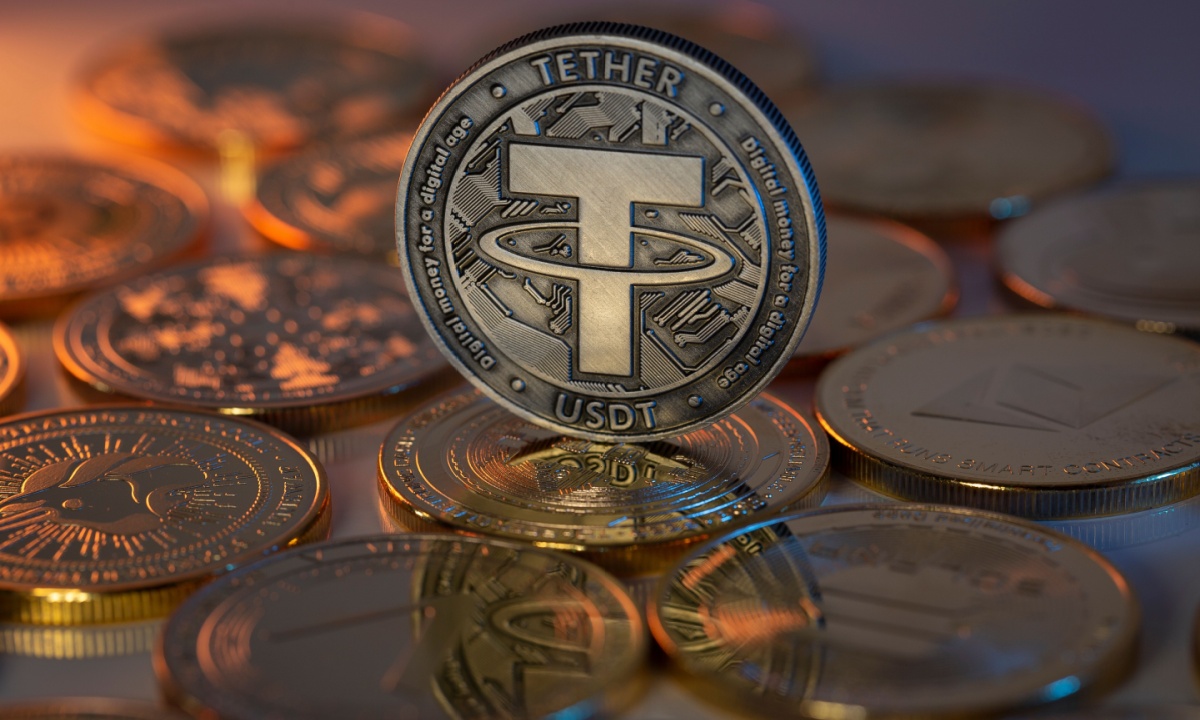
Stablecoin issuer Tether is reportedly on track to return to doing business in the United States.

Tether CEO Paolo Ardoino said Wednesday during a Bloomberg Television interview that the company is “well in progress of establishing our U.S. domestic strategy” and plans to focus on payments and interbank settlement and trading, Bloomberg reported Wednesday (July 23).

El Salvador-based Tether, whose USDT stablecoin is the most traded cryptocurrency by volume globally, was banned from operating in New York and paid almost $60 million to the state and the U.S. Commodity Futures Trading Commission in 2021 to settle their allegations that the company made untrue and misleading claims, according to the report.

While expanding into the U.S., Tether continues to focus on emerging markets, Ardoino said Wednesday, per the report.

Addressing questions about Tether’s failure to provide audits, despite promising to do so, Ardoino said the company has talked with auditors about engaging them, according to the report.

Ardoino also told Bloomberg that, “in general,” Tether is not interested in becoming a public company.

In a May 23 interview with Bloomberg TV, Ardoino said that Tether plans to continue to focus on markets outside the U.S. even as it works to become compliant with U.S. regulation of stablecoins.

That report noted that most of Tether’s reserve is made up of assets that would be compliant, but some of it is comprised of non-compliant ones like bitcoin and secured loans, and that the company currently releases quarterly attestations signed off by BDO Italia SpA rather than an audit of its reserves by a Big Four accounting firm (namely, DeloitteEYKPMG and PwC).

While Tether aims to become compliant in the U.S., Ardoino said in May, “our customer base are the 30 billion people unbanked that are not touching the banking system.”

It was reported in May that Tether plans to launch a new dollar-pegged stablecoin in the U.S. within a year.

The company also released its first-quarter 2025 attestation in May, saying that as of March 31, Tether had $149.28 billion in total assets against $143.68 billion in liabilities for fiat-backed stablecoin holdings.

It was reported at the time that Tether’s tokens represent 70% of the stablecoin market.

Continue Reading
Click to comment

Leave a Reply

Your email address will not be published. Required fields are marked *

Fintech

Speed Raises $8 Million to Expand Bitcoin and Stablecoin Payment Solutions | PYMNTS.com

Published

on

The company will use the new funding to build capacity, expand to new regions, develop more merchant tools, enable cross-border and creator payouts, and maintain reliability and compliance, it said in a Tuesday (Dec. 16) blog post.

Speed’s offerings include a global payment layer called Speed Merchant that is designed for merchants, platforms and payment systems and enables them to accept both Bitcoin and stablecoins, according to the post.

The company also offers a Lightning wallet called Speed Wallet that serves individuals and businesses and enables Bitcoin and stablecoin transfers, supports global payouts, offers local on- and off-ramps, and powers USDT transactions, the post said.

“We’ve always believed that Bitcoin and stablecoins can power everyday payments,” Speed CEO Niraj Patel said in the post. “That requires real infrastructure—fast, compliant and scalable. This investment validates that belief and accelerates our mission.”

Speed co-founder Jayneel Patel said in the post that the company aims to “solve real problems with technology.”

Advertisement: Scroll to Continue

“Speed started as a merchant solution and has grown into a global payment network,” Jayneel Patel said, adding the company is “ready to take the next leap.”

Stablecoin issuer Tether and venture fund ego death capital co-led the funding round, per the post.

Tether said in a Tuesday press release that its investment supports its strategy to support Bitcoin-aligned financial infrastructure and expand the utility of its USDT stablecoin in real-world payment environments.

“We support teams building practical infrastructure that reduces friction in payments and expands access to reliable settlement rails,” Tether CEO Paolo Ardoino said in the release.

Tether’s USDT stablecoin is the most traded cryptocurrency by volume around the world.

Adam Gebner, associate at ego death capital, said in a Tuesday blog post that Speed processed over $1.5 billion in payment volume over the past 12 months and serves more than 1.2 million users.

“By bridging Lightning and stablecoins in a single, compliant platform, Speed is positioning itself as foundational infrastructure for the Bitcoin and stablecoin economy, serving merchants, platforms and users across both developed and emerging markets,” Gebner said in the post.

Continue Reading

Fintech

Databricks Targets $134 Billion Valuation in New Funding Round | PYMNTS.com

Published

on

Data analytics/artificial intelligence (AI) firm Databricks is reportedly raising $4 billion in a new funding round.

This Series L round would value the company at $134 billion, up 34% from its last session of funding during the summer, the Wall Street Journal (WSJ) reported Tuesday (Dec. 16).

Ali Ghodsi, Databricks’ co-founder and CEO, told the WSJ the company plans to use the new funding to invest in its core data-analytics products and AI software, while also letting its workers engage in secondary share sales.

The company, among the most valuable private firms in Silicon Valley, also plans to hire around 600 fresh college graduates in 2026, the CEO added, in addition to adding thousands of new jobs worldwide in Asia, Latin America and Europe. It also plans to hire AI researchers, who are typically paid top salaries, the WSJ added.

The report noted that Databricks has benefited from the AI boom, which relies partially on private corporate data to customize AI models. Databricks told the WSJ that its data-warehousing product, which can serve as an underlying data platform for AI services, surpassed a $1 billion revenue run rate at the end of October.

This year has seen Databricks ink deals with OpenAI and Anthropic to help sell AI services to business customers. Each of these partnerships are designed to push clients to develop AI agents, or independent bots that can carry out tasks on behalf of humans.

Advertisement: Scroll to Continue

The company’s new funding round comes three months after Databricks’ Series K round, which valued it more than $100 billion, up from $62 billion at the start of the year.

In other AI news, PYMNTS wrote earlier this week about The General Intelligence Company of New York, a start up developing agent-based systems designed to take over large portions of company operations.

“The company’s name deliberately evokes Gilded Age ambition, and founder Andrew Pignanelli told PYMNTS that the reference was intentional,” that report said. “He said he views AI as foundational infrastructure for the next era of company-building, much as railroads and industrial capital reshaped the United States economy more than a century ago.”

The company started by working backward from “the one-person billion-dollar business,” as Pignanelli termed it.

“We started at the end, the actual one-person billion-dollar company, and worked our way back and we were like, ‘What can we do today?’” he said.

Continue Reading

Fintech

Apple App Store Fees Face Pressure From EU Developers | PYMNTS.com

Published

on

A collection of app developers and consumer groups want Europe to enforce laws against Apple.

The Coalition of App Fairness (CAF) on Monday (Dec. 15) issued an open letter to the European Commission (EC) accusing the tech giant of “persistent” non-compliance with Europe’s Digital Markets Act (DMA).

The letter follows findings from the EC that Apple had violated the DMA by keeping developers from directing users to alternative payment methods, fining the tech giant $588 million.

Apple in turn revised its terms for its app store to impose fees that ranged from from 13% for smaller businesses to up to 20% for App Store purchases. However, the CAF says Apple has not addressed what it calls a core issue: the company’s fees are preventing fair competition.

“The law says that gatekeepers like Apple must allow developers to offer and conduct transactions outside of the App Store free of charge,” the letter said. “However, Apple is now charging developers commission, fees of up to 20% for such transactions. This is a blatant disregard for the law with the potential to vanquish years of meaningful work by the Commission.”

The CAF also notes that Apple plans to introduce new terms and conditions for the App Store next month, and says it suspects the new terms will include fees that violate the DMA.

Advertisement: Scroll to Continue

“Apple cannot be permitted to exploit its gatekeeper position by holding the entire industry hostage,” the letter added.

PYMNTS has contacted Apple for comment but has not yet gotten a reply. The company had in September called on the commission to rethink the DMA, which was created to prevent market abuse by tech giants doing business in Europe.

“Over that time, it’s become clear that the DMA is leading to a worse experience for Apple users in the EU,” Apple wrote in a blog post. “It’s exposing them to new risks, and disrupting the simple, seamless way their Apple products work together. And as new technologies come out, our European users’ Apple products will only fall further behind.”

In its blog post, Apple argued the DMA requirements for allowing other app marketplaces and alternative payment systems don’t take into account the privacy and security standards of the App Store, putting customers at risk for being overcharged or scammed.

“The DMA also lets other companies request access to user data and core technologies of Apple products,” the company wrote. “Apple is required to meet almost every request, even if they create serious risks for our users.”

Continue Reading

Trending